
Reluctant innovation is innovation that starts not with a plan, but with a problem that finds you.
For years, the story of innovation has been told as one of lone visionaries – Silicon Valley disruptors, venture-backed founders and ambitious entrepreneurs racing to scale and capture market share. It is a compelling story, but it leaves out a great many people who changed things for the better without ever meaning to.
Reluctant innovation is a counter-narrative. It argues that some of the most meaningful solutions to social and environmental problems come not from a hunt for market opportunity but from empathy, necessity and a simple refusal to ignore a problem. Reluctant innovators are people who unexpectedly come up with an innovative solution to a problem they have experienced or witnessed, one that has angered, bugged, disturbed or frustrated them so much that they end up dedicating much of their lives to solving it.
They are innovators, but not through choice.
The term ‘reluctant innovation’ was coined by Ken Banks, founder of kiwanja.net. It took shape in a 2011 blog post, reached a wider audience in a 2012 article in Wired UK, and was explored in depth in the 2013 book The Rise of the Reluctant Innovator, which carries a foreword by Archbishop Desmond Tutu.
How reluctant innovation rewrites the rules of social entrepreneurship
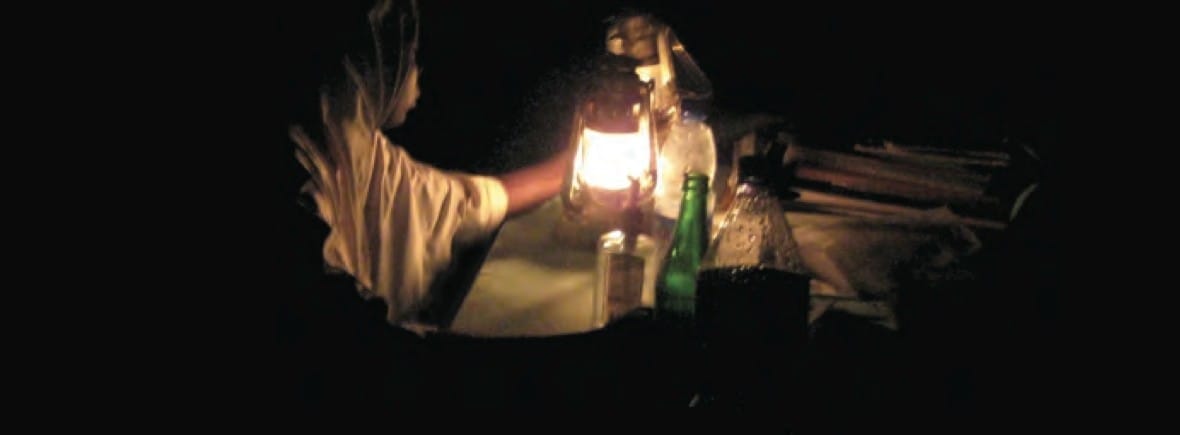
Reluctant innovators are ordinary people – doctors, academics, parents and community members who run into something that is wrong and cannot walk away from it. Brij Kothari, watching a film with friends, wondered why the subtitles were not in the viewer’s own language, an idea that became a literacy programme reaching hundreds of millions of Indian children. Laura Stachel went to Nigeria to work on one problem, saw that a lack of lighting in maternity wards was costing lives, and set about designing solar kits to fix it. Sharon Terry’s children were diagnosed with a rare genetic disease about which little was known, and she and her husband found there was no one else to take it on.
This sits uneasily with the way social entrepreneurship is often taught. Classes in social innovation, social entrepreneurship and design thinking have become increasingly popular, yet few people in the field ever set out to become a social entrepreneur. Business plans and elevator pitches can be learned. A passion or a calling cannot be manufactured. Banks’s advice is to go out and find the thing that switches you on, and to learn the rest later, if and when you need it.
So why ‘reluctant’ rather than ‘accidental’? Because accident implies luck, and it was not luck that put these people where they were. Reluctance describes something different. They were not looking for a cause, they took the harder path when an easier one was available, and they accepted a burden because the problem was bigger than any one person. Few would have said no to a quieter life.
Start with the problem, not the technology
Reluctant innovation also carries a warning for the technology world, where it is tempting to build a solution first and go looking for a problem afterwards. Each of the innovators in the book had first-hand exposure to the problem they decided to solve, which gave them both insight and credibility with the people they were trying to help. Banks has long argued that we should not develop solutions to problems we do not understand, take ownership of problems that are not ours, or build ‘solutions’ thousands of miles away and then look for somewhere to put them.
His own experience fits the pattern. After years working with small NGOs across Africa, he found that grassroots groups had almost no simple mobile tools they could pick up and run with. FrontlineSMS grew out of that gap, and he has described himself as a reluctant innovator in that work. It is the same thinking that sits behind the Social Mobile Long Tail.
Reluctance can be a virtue in its own right. Wes Janz, whose chapter closes the book, argues that what we need is more of it – when faced with a problem, hesitate, doubt and think before acting. People determined to ‘do something’ can sometimes do more harm than good, and sometimes the best thing we can do is step back.
Two ways of approaching change
| Planned innovation | Reluctant innovation | |
|---|---|---|
| Starting point | A market opportunity or a chosen cause | A problem experienced or witnessed first-hand |
| Who | Trained entrepreneurs, often backed to scale | Ordinary people with no plan to innovate |
| Motivation | Ambition and opportunity | Frustration at a wrong, and a sense that no one else will fix it |
| How it begins | Deliberately, with a plan | By stumbling on the problem, or having it find you |
A simplification, of course. Most real stories sit somewhere between the two.
Why reluctant innovation matters today
The enduring appeal of reluctant innovation is that it is inclusive. It suggests that progress is not the preserve of a small group of well-funded founders, and that ordinary people can look at a broken system, decide they cannot look away, and build something because nobody else will.
The idea is also finding new uses. A 2025 paper from the Swedish Entrepreneurship Forum, by Pontus Braunerhjelm and Maryna Brychko, applied the term ‘reluctant innovation’ to Ukraine’s drone industry, drawing directly on Banks’s book. The authors describe innovation driven not by profit, prestige or long-term strategy, but by necessity and an overwhelming desire to solve urgent, real-world problems. Rather than a handful of heroic inventors, thousands of engineers, software developers, volunteers and small businesses became innovators almost by accident when confronted with an existential crisis. Existing skills, volunteer networks and grassroots initiatives combined with rapid government reforms, supportive procurement and international partnerships to produce hundreds of drone designs in just a few years. Banks wrote about the paper in Return of the reluctant innovator.
It is a striking reminder of the central argument. Faced with immediate human need, people stop asking how they might invent something and start asking how they can solve a very real problem. Innovation becomes the outcome rather than the objective. For anyone drawn to making a difference, the lesson is a hopeful one – spend time where problems can find you, and the qualifications you need may come down to a little faith, hope and determination.
Further reading
- Genius Happens When You Plan Something Else – the Wired UK article, May 2012
- The rise of the reluctant innovator – the first post, February 2011
- The innovation/entrepreneurship divide
- In search of reluctant innovators
- Why planning isn’t everything
- Ukraine’s drone industry – the Swedish Entrepreneurship Forum paper (PDF)
- The Rise of the Reluctant Innovator – the book, with a free PDF
- All blog posts about reluctant innovation
- Thought leadership – more writing and ideas from kiwanja