
It’s been a challenging week. Not as challenging, of course, for those who continue to suffer in Gaza, the West Bank, South Lebanon and beyond, but challenging for me in a different kind of way.
My LinkedIn posts, whatever the topic, tend to come from a place of genuine curiosity, compassion or concern. Anyone who knows me will be aware of my heightened level of sensitivity, my ‘empathy overdrive’ as I often call it. It’s something I struggle with, not rejoice in. So when I post about unimaginable human suffering that most of the world seems to be ignoring, I don’t expect to have to justify calling it out. I assume that the feeling of sadness, anger and frustration would be universal. Suffering is suffering, and it shouldn’t be necessary to debate whether some suffering is acceptable while some is not.
At least that’s what I would hope.
But defend myself I have. Over the last few months I’ve found myself repeatedly challenged by those who believe the deaths of 75,000 civilians in Gaza is somehow okay, that they deserved it in some way, and that any country should have the right to do whatever it likes in order to defend itself. It’s the same with Lebanon. The argument goes that the displacement of millions, the deaths of thousands and the levelling of entire towns and villages in the south is fine because the objective is self defence, even if those being killed and displaced have nothing to do with the conflict. “Our lives, and our right to live in peace, is greater than anyone else’s”.
From what I can tell there are a handful of ‘common justifications’ for the war, and the repeated violations of the ceasefire and humanitarian law, in Gaza in particular:
- October 7th
- Hostages (less relevant now)
- ‘They’ want Israel annihilated
- Hamas must be completely defeated
- Preventing future attacks
- Buffer zones for security
- Hamas uses civilian infrastructure for military purposes
- Israel ‘has no choice’
- Everyone in the strip is a terrorist and therefore a legitimate target
Some of my posts start with the words ‘Buts aside’ because I refuse to believe that anyone could be proud of what’s being done in their name. How anyone can’t feel an ounce of remorse or concern for any of this is beyond me. Because the numbers speak for themselves.
- In Gaza there have been 72,819 reported civilian deaths and 172,894 wounded. Over 20,000 children have died, and 45,000 injured
- At least 235 journalists and media workers have been killed in Gaza, despite claims they are never targeted
- The World Health Organisation has documented 735 attacks on health care facilities in Gaza, including 35 attacks on hospitals. This is not just immoral. It’s illegal under international humanitarian law
- In Southern Lebanon, 16 hospitals have been damaged in recent weeks, and 147 ambulances have been attacked. Five hospitals have been forced to close. There are no tunnels under these hospitals
- UN satellite analysis has identified 123,464 structures destroyed in Gaza with another 198,273 damaged. 81% of all structures in the strip have been hit
- Roughly 60% of Gaza’s population – approximately 1.2 million people – have lost their homes
- Tens of thousands of properties have been systematically demolished in Southern Lebanon since the ‘ceasefire’ in a 600 square kilometre ‘buffer zone’
- Israel’s far-right National Security Minister Itamar Ben-Gvir released a video of him taunting foreign flotilla activists who were bound and tied on the ground after their arrest and detention
- UN Human Rights report that Israeli forces and settlers have killed 1,054 Palestinians in the West Bank, including East Jerusalem. Over 760 settler attacks have been documented since the outbreak of war, the majority supported and encouraged by Israel’s far right government
- The UN recently added Israel to its ‘blacklist’ for sexual violence in conflict zones, a significant international condemnation reflecting documented allegations of abuse by detained flotilla activists and broader concerns about the treatment of Palestinian detainees
- Over 3,000 people have been killed by Israeli attacks on Lebanon in the past three months
- Over a million people in Gaza remain in urgent need of basic shelter and humanitarian relief
- The list goes on
People can agree with it or not, or feel it is justified or not, but these things have all happened, or continue to happen. The only thing that appears to be in dispute is whether or not the victims deserved it, which is a hard pill to swallow.
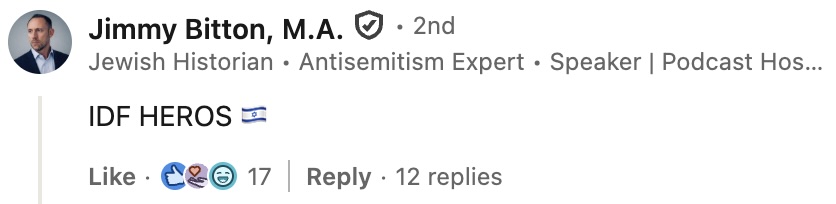
I truly get the anger and distress caused by October 7th, if we take just one justification for the war. What happened that day was horrific, barbaric and inexcusable. But so has been the response. Yet I don’t see a single comment from anyone sharing an ounce of regret or demonstrating any embarrassment or shame for the extreme actions of the Israeli government. None. Many just cheer on the IDF and say how amazing it all is, and what heroes they are. And then they wonder why the tide of public opinion is increasingly turning against them. But not to worry – just call all critics antisemitic and ‘jew haters’ and they’ll soon be scared into submission. That’s the tactic, anyway.
On many occasions I’ve tried to respond honestly to supporters of the war in my effort to genuinely understand the mindset of those I don’t agree with. But so far it’s proved virtually impossible. On top of the killing, the suffering and the distress of everyone living in Palestine, Iran and Lebanon, my biggest disappointment is the lack of humanity shown by the aggressors – on both sides. I’m still waiting to have a conversation about all of this, one that comes on all sides from a place of genuine concern and acceptance that this level of suffering is wrong.
One day, as Omar El Akkad puts it brilliantly in his book, everyone will have always been against this. But right now it feels like much of the world is washing its hands of the whole sorry saga, and meanwhile the killings – and the arguments justifying it all – go on.
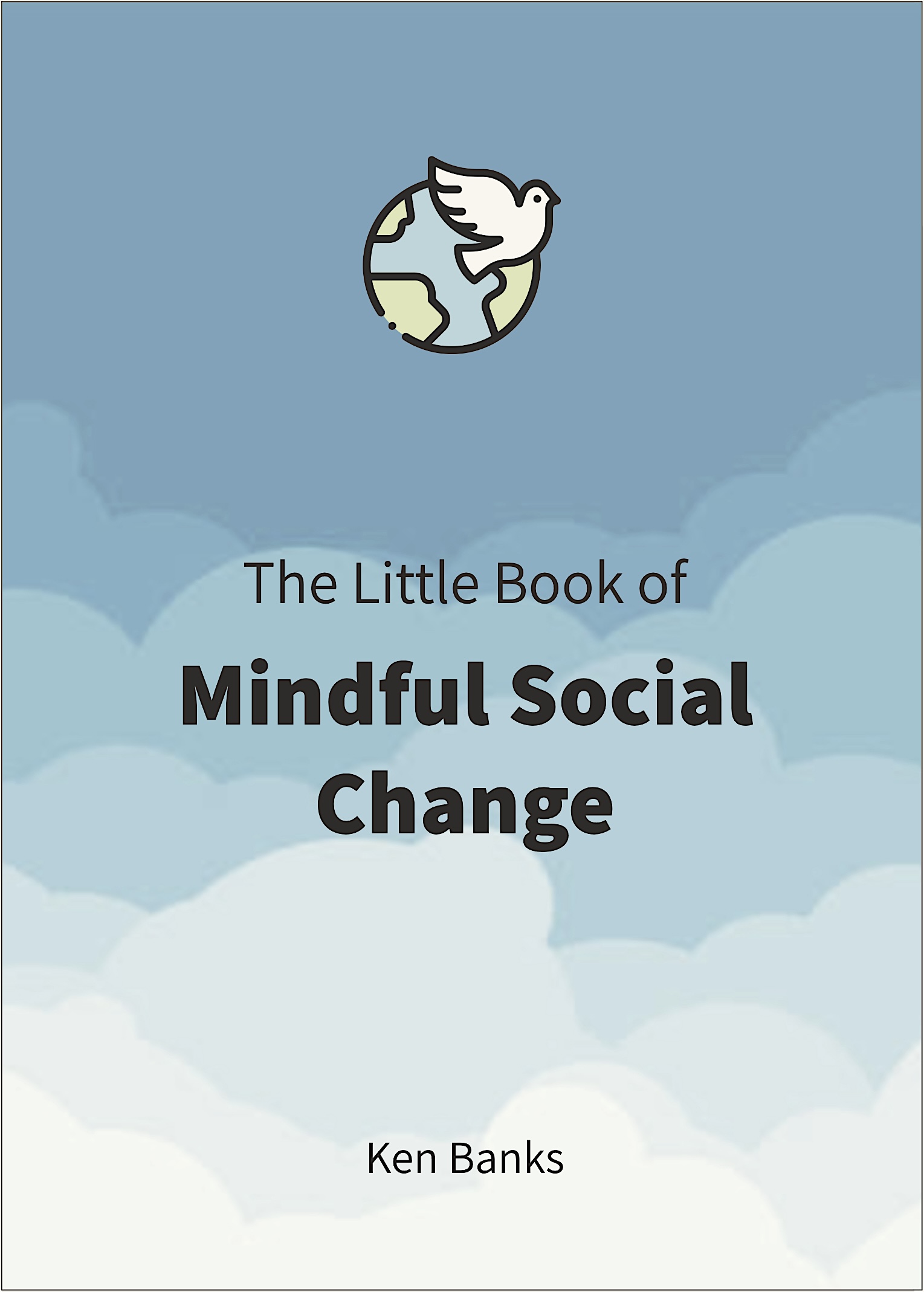 The universe delivered and I published it yesterday.
 When I did eventually do something impactful with FrontlineSMS, when I stepped back people assumed I’d got rich from it. After all, it was incredibly successful and had scaled to just about every country on earth. But the reality was very different. FrontlineSMS was always a free tool, it had no business model behind it, and when I stepped away there was no big pay day.