Live Aid @ 40

It’s not often you can pinpoint the precise moment in time that your life moved in an entirely different, and unexpected direction. For me, 13th July 1985 – probably around midday – was that moment. I remember it well.

Live Aid that summer has come under intense scrutiny, particularly over recent years, accused of oversimplifying the Ethiopian famine and failing to address the complex political and structural causes of the crisis. In particular, critics argue that the event promoted a ‘white saviour’ complex. Many of these accusations are fair, but not all.

What follows is an extract from my latest book, The Pursuit of Purpose, where I share what, back at the time of Live Aid, was a desperate search for purpose and meaning in my life. I owe a lot to Live Aid, faults and all.

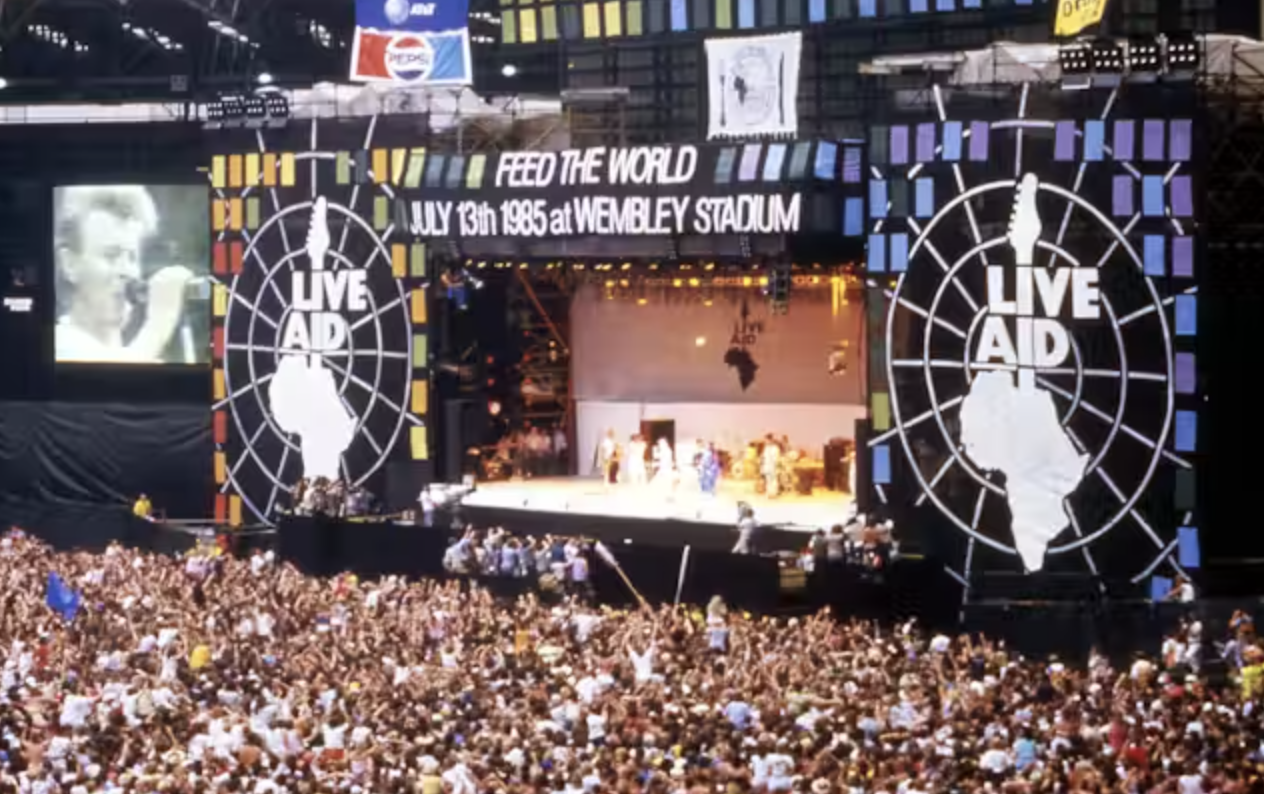
“It took a global music event, of all things, to give me what I was missing. At precisely noon one hot Saturday afternoon in July 1985, Live Aid kicked off with Status Quo’s aptly-named ‘Rocking All Over The World’, signalling the start of one of the largest and most ambitious live music concerts and global fundraising events ever held.  As I settled down to watch the opening of the show, little did I know how significant this day would turn out to be in my life. Over the previous two years a famine of biblical proportions had gripped Ethiopia, the worst to hit the country in over a century. These were pre-World Wide Web days and incredibly the famine, which was estimated to have impacted seven million people and killed another one million, had been kept largely hidden from view by the Ethiopian government. Described as ‘the closest thing to hell on earth’ by BBC reporter Michael Buerk, it was his report and film, the first by any journalist, which drove home the severity of what was happening and spurred a massive UK and global humanitarian response.

After watching Michael Buerk’s report, pop stars Bob Geldof and Midge Ure quickly mobilised two dozen fellow musicians and, in a single day in November 1984, recorded ‘Do They Know It’s Christmas?’, a hugely successful charity single released to raise urgent funds for the famine response. It became the fastest-selling UK single (it has since been overtaken by Elton John’s 1997 ‘Candle in the Wind’, a tribute to Lady Diana), selling a million copies in its first week alone and hitting the top of the charts in 14 countries, including the UK. The summer Live Aid concert was conceived as a follow-up to the Christmas single and, at its peak, boasted a global audience of almost two billion people in over 150 countries.

And sitting uncomfortably at home on Five Oaks estate, I was one of them.

My immediate reaction that day to stories and images of poverty and famine was one of shock, horror, embarrassment and guilt. Up until then I’d been largely focused on my own little world and, I hate to admit it, I poorly understood life for other people in other places. Jersey can do that to you. These days we have little excuse for not paying attention given the rise of the World Wide Web, online news and social media. Back in the 1980s, news occasionally bubbled slowly up out of the ground. There was no such thing as ‘breaking news’ that you could follow. Instead, an event would often come straight out and hit you like a ton of bricks. One minute there was no famine, and the next minute there was, and a biblical one at that.”

Compassion in the face of conflict

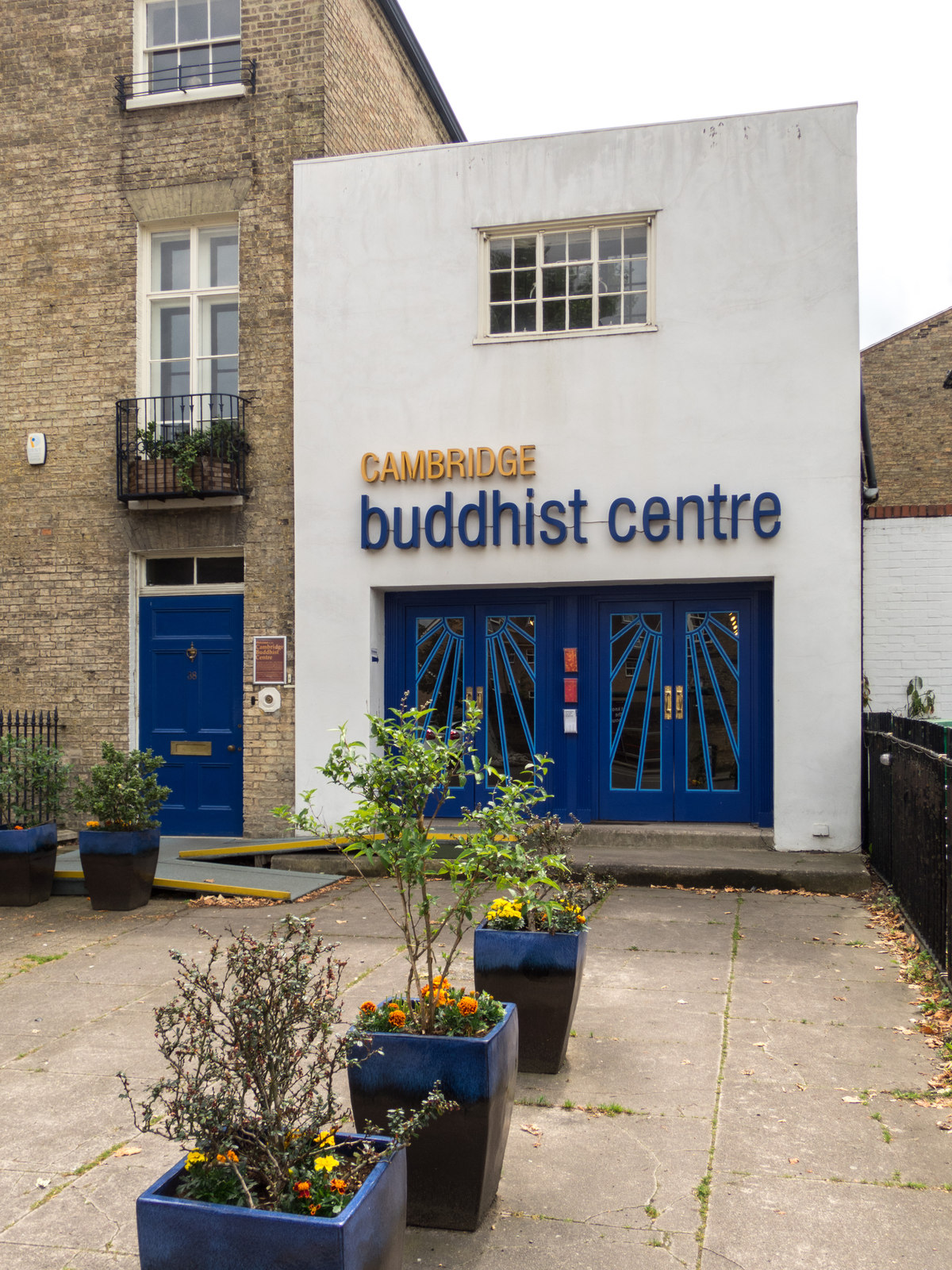
A few weeks ago I took part in a weekend retreat at the Cambridge Buddhist Centre, something I’ve wanted to do for a long time. Meditation, Buddhist teachings and vegan food were the order of day, but for me the greatest insight came from conversations I had with the monks about their journeys, beliefs and opinions on Buddhism and modern life. Seeking personal enlightenment felt all well and good, I said, but how does that square with issues on the ‘outside’? You know, such as my frustration and anger with all the needless conflict and suffering going on around the world?

Image courtesy Wikipedia

Despite many great conversations, I never did get any answers that sat well with me. As someone whose work has been driven by empathy and rooted in action for so many years, stepping back and focusing my energies on how I deal with my own feelings didn’t feel like much use to anyone experiencing the suffering.

I’ve had plenty of time to think about this, and thought it might be helpful to write some of it down. But first, a caveat. While it may not have given me the answers I sought, Buddhist thinking does offer plenty of tools for engaging with situations beyond our control without falling into despair, reactivity or hatred. While Buddhism does not offer geopolitical solutions to problems, it does provide a framework for how individuals and communities might respond to suffering with clarity, compassion and courage. I’ll share some of those tools here, starting with non-attachment.

The Principle of Non-Attachment

Buddhism teaches us that our own suffering often arises from our attachment to outcomes. When we’re overly committed to a desire for peace, or for justice to be delivered in a particular way, we’re more likely to experience intense frustration or helplessness when nothing ever seems to get any better.

We’re also told that this non-attachment doesn’t mean apathy or indifference. Instead, it’s meant to allow people like me (and others far removed from the conflict) to engage constructively without being overwhelmed by feelings of rage, grief or despair. This is supposed to help us remain steady in the face of intractable suffering, continuing to care and act where we can.

To be honest, I find the application of this principle pretty difficult, particularly in the face of intolerable human suffering. Maintaining emotional distance doesn’t sit comfortably with me.

Compassion and the Recognition of Shared Suffering

Buddha taught us that all humans suffer and seek freedom from that suffering, and that compassion comes about naturally when we acknowledge this shared vulnerability. The trouble is not everyone does. With the Palestinian conflict, for example, a Buddhist approach would encourage all sides to see the humanity in everyone – Israeli and Palestinian – recognising that fear, trauma and loss are not one-sided. Buddhism invites us to hold both communities in our hearts without taking sides in a way that leads to any kind of dehumanisation.

This is another tricky one, especially in the face of what feels like relentless injustice and violence, but it’s critical for building true peace (think: Archbishop Tutu and South Africa’s Truth and Reconciliation Commission). I hate to say it, but this is another concept I have to work particularly hard at. Luckily I’m a good listener, and that might be a helpful starting point.

Right Speech and Deep Listening

Buddhism encourages speech that is truthful, kind and unifying. Sadly I don’t see much of this, particularly from our political leaders (don’t even get me started on social media). Buddhism also teaches the value of deep listening, and asks that we truly hear the suffering of others. Polarised narratives often dominate public conversation about conflict. A Buddhist-informed approach would encourage listening deeply to all sides and all stories without defensiveness or premature judgment. The objective here is to foster empathy and reduce the tendency to vilify or dehumanise the ‘other’.

The Impermanence of All Things

A central tenant of Buddhism is that nothing is fixed, and even the most entrenched suffering and conflict will eventually change (and hopefully improve and go away). Recognising this allows us to maintain hope and counteract despair by reminding us that today’s reality is not forever, and that seeds of peace, however small, can take root at any time. While any of this is hard to disagree with, I struggle with relying on others to plant those seeds. I’ve always felt that I needed to be there doing the planting with them. Maybe not.

Acting Without Ego

Buddhism discourages acting from a place of self-righteousness or moral superiority. This is perhaps one of the easiest concepts for me to grasp. I’ve worked hard throughout my career to suppress ego, and to genuinely listen to and empower others without agenda. In activism and humanitarian response, acting without ego encourages humility. We can all support peace, justice and dignity for all without needing to be right all the time (whatever that might look like) or to dominate the discussion. All of this reminds me of the importance of putting the needs of those suffering front, right and centre – not any opinions we might have about the conflict.

Mindfulness and Inner Peace

Mindfulness allows us to observe our emotions without being consumed by them, something I’m slowly getting better at. In moments of helplessness, mindfulness allows us to notice our pain without turning it into hatred or numbness. This creates space for grounded, thoughtful action rather than reactive outrage. Sadly, in today’s short-term attention economy, sitting back and reflecting before reacting and responding is becoming increasingly rare. I sleep on things a lot more these days before deciding what steps I might take, if any.

FINAL REFLECTIONS

In all my Buddhist reading, study and practice over the last couple of years, trying to balance my deep feelings about conflict and human suffering with my gut reaction to get active and do something about it has been by far my biggest challenge. I get the need for enlightenment, to better understand ourselves and to manage how we process things, but I’m yet see how any of that makes much of a difference to people being bombed out of existence every day.

In its defence, nowhere does Buddhist thinking ask us to withdraw from injustice, but it asks us to engage in a way that does not create more suffering. It encourages action rooted in understanding, presence and compassion, all qualities that are desperately needed in the face of seemingly impossible and never-ending conflict. Thich Nhat Hanh, a Buddhist monk who lived through the Vietnam war, often said that ‘Peace in the world begins with peace in ourselves.’

He’s probably right. I’ll let you know if I ever get there.

Mindful action. Meaningful change.

Whenever we set out to make the world a better place, our instinct is often to jump straight in and get ‘doing’. Driven by a sense of urgency that pushes us to act without delay, we find ourselves desperate to fix, or to build, or to solve. Perhaps it’s because we’re drawn to the visible impact of the doing, but if there’s one thing I’ve learned throughout my own journey it’s that meaningful, lasting change rarely starts with action.

It starts with understanding. And understanding begins with mindfulness.

In my own work, particularly during the development of FrontlineSMS, I’ve learnt that you can’t ever assume to know what people need or want. That assumption is the biggest mistake I’ve seen people make over the years. Before I’d even written a line of code I spent time listening, observing, probing and asking questions. I always felt it was important to try and step into the shoes of the people I wanted to try and help, and to spend time with them. And what I realised was that the most appropriate solutions weren’t tech-focused, but people-focused.

Assessing an aid project with CARE staff and recipients, Malawi (2015). Photo: Hayley Capp

Although I didn’t realise it at the time, my anthropological approach aligned perfectly with core Buddhist thinking, which teaches us to act without attachment to outcome, to listen deeply and to cultivate compassion as a guide to action. It invites us to bring awareness into each step we take, resisting the rush to do, and instead choosing to be fully present with the people and problems we encounter.

This is the foundation of mindful action.

Mindful action means creating space between intention and impact. It means recognising that the desire to help, while noble, can still do harm if not grounded in humility. Many well-meaning projects fail because they are imposed rather than grown from the ground up. They ignore the wisdom of local people. They treat symptoms, not causes. Mindfulness helps us slow down enough to see the whole picture.

For many years now I’ve promoted empathy as the starting point for all meaningful development work. True empathy requires us to suspend judgment, to listen without waiting to reply, and to accept that we might not have all the answers. In a world desperate for quick fixes, overnight successes and shiny new tech, my approach sometimes came across as a little radical, although I always saw it as plain common sense. However you define the approach, it was certainly a necessary one. The complexity of global challenges – from inequality to climate change and everything in between – demands depth, not just speed.

Mindful action also asks us to reflect on our motivations. Are we helping because we want to be seen as helpful? Because we need to feel useful? Or because we have truly connected with the issue and the people affected by it? When our actions are aligned with genuine care and awareness, they carry a different energy. They become sustainable. They invite collaboration. They build trust. And harmony. 

There’s a quiet strength in pausing. In taking the time to understand a community’s history, values, needs and dreams before proposing solutions. In other words, in living with uncertainty rather than rushing to fill the silence. Practicing mindful action helps us realise that sometimes the best thing we can do is listen. Or amplify someone else’s voice. Or step back entirely.

Technology can be a powerful tool for change, but it is only as effective as the intention and context behind its use. In my work I’ve seen how simple, low-tech solutions can transform lives when designed with empathy and care. I’ve also seen how high-tech projects fail spectacularly when they ignore local realities or are primarily ego-driven. Mindful action is not about the size of the solution. It’s about the depth of the connection.

Bushbuckridge, South Africa (2003), where I carried out my early mobile work.

For any doubters out there, mindful action doesn’t mean inaction. It means intentional, thoughtful and respectful movement. It means taking time to understand before intervening, and knowing when to lead and when to follow. It calls on us to let go of control, to be open to change, and to see the people we work with not as beneficiaries, but as equals and experts in their own lives. Sometimes I feel that much of the global development work I witnessed over the years had forgotten this, and that was one reason I stepped back all those years ago.

In the end, practicing mindful action is about aligning our external efforts with our internal values. It asks us to lead with presence, to build with care and to remain open to being changed by the work that we do. It might not always be fast, and it might not always be easy, but it is real. And in a world craving authenticity and connection, that may be the most powerful form of change we have.

Why we need more anthropologists

Today I’m back at the University of Edinburgh talking to anthropology students about how I’ve used my degree in my global technology/development career. I can’t overstate how refreshing it is to speak to a room not obsessed with technology, or scaling projects, or measuring impact. For me, it’s always started with the people and, for everyone in the room, it will be the same. I’ve long advised people interested in a career in global development to study anthropology (better still, anthropology with development studies, as I did at Sussex University).

It may sound crazy, but there aren’t enough people focused on understanding people in the technology-for-development world (one week field trips carrying out surveys don’t count). You see plenty of ‘Technology Advisor’ roles, but where are the ‘People Advisors’? There’s plenty of everything else, just not enough of that. I’m currently looking at work opportunities in the technology-for-development sector, and don’t think I’ve seen a single job description define a major requirement for time spent in the field, understanding the context of technology use in global development. And, of course, no mention of the word ‘anthropology’ anywhere. Everything else seems to matter more than that, and it’s something we have to put right. Anthropology has a huge amount to offer the sector – it just doesn’t seem to know it yet.

A question that I often get asked when people get over the shock that I have an anthropology degree, not something computer science-related, is “What on earth would anthropologists be doing playing with mobile phones?”. The answer may be a little more obvious than you think, but let’s start at the beginning.

Anthropology is an age-old, at times complex discipline, and like many others it suffers from its fair share of in-fighting and disagreement. It’s also a discipline shrouded in a certain mystery. Few people seem to know what anthropology really is, or what anthropologists really do, and a general unwillingness to ask simply fuels the mystery further. Few people ever question, for example, what a discipline better (but often incorrectly) ‘known’ for poking around with dinosaur bones is doing playing with mobile phones and other digital devices.

What anthropology isn’t

The public face of anthropology likely sits somewhere close to an Indiana Jones-type character, a dashing figure in khaki dress poking around with ancient relics while they try to unpick ancient puzzles and mysteries, or a bearded old man working with a leather-bound notepad in a dusty, dimly lit inaccessible room at the back of a museum building. If people were to be believed, anthropologists would be studying everything from human remains to dinosaur bones, old pots and pans, ants and roads. Yes, some people even think anthropologists study roads.

Despite the mystery, in recent years anthropology has witnessed something of a mini renaissance. As our lives become exposed to more and more technology, and companies become more and more interested in how technology affects us and how we interface with it, anthropologists have found themselves in increasing demand. When Genevieve Bell turned her back on academia and started working with Intel in the late 1990’s, she was accused of “selling out”. Today, anthropologists jump at the chance to help influence future innovation and, for many, working in industry has become the thing to do.

What anthropology is

So, if anthropology isn’t the study of ants or roads, what is it? Generally described as the scientific study of the origin, the behaviour, and the physical, social, and cultural development of humans, anthropology is distinguished from other social sciences – such as sociology – by its emphasis on what’s called cultural relativity, the principle that an individuals’ beliefs and activities should be interpreted in terms of their own culture, not that of the anthropologist. Anthropology also offers an in-depth examination of context – the social and physical conditions under which different people live – and a focus on cross-cultural comparison. To you and me, that’s comparing one culture to another. In short, where a sociologist might put together a questionnaire to try and understand what people think of an object, an anthropologist would immerse themselves in the subject and try to understand it from ‘within’.

Anthropology has a number of sub-fields and, yes, one of those does involve poking round with old bones and relics. But for me, development anthropology has always been the most interesting sub-field because of the role it plays in the gobal development arena. As a discipline it was borne out of severe criticism of the general development effort, with anthropologists regularly pointing out the failure of many agencies to analyse the consequences of their projects on a wider, human scale. Sadly, not a huge amount has changed since the 1970’s, making development anthropology as necessary today as it has ever been. Many academics – and practitioners, come to that – argue that anthropology should be a key component of the development process. In reality, in some projects it is, and in others it isn’t.

The importance of KYC (Know Your Customer)

It’s widely recognised that projects can succeed or fail on the realisation of their relative impacts on target communities, and development anthropology is seen as an increasingly important element in determining these positive and negative impacts. In the consumer electronics sector – particularly within emerging market divisions – it is now not uncommon to find anthropologists working within the corridors of hi-tech companies. Intel, Nokia and Microsoft are three such examples. Just as large development projects can fail if agencies fail to understand their target communities, commercial products can fail if companies fail to understand the very same people. In this case, these people go by a different name – customers.

Selling phones as torches in Uganda. Photo: Ken Banks

The explosive growth of mobile ownership in the developing world is largely down to a vibrant recycling market and the initial arrival of cheap $20 feature phones (and now $75 smartphones), but is also down in part to the efforts of forward-thinking mobile manufacturers. Anthropologists working for companies such as Nokia spend increasing amounts of time trying to understand what people living at the bottom of the pyramid, or those with very limited disposable income, might want from a phone. Mobiles with flashlights are just one example of a product that can emerge from this brand of user-centric design. Others include mobiles with multiple phone books, which allow more than one person to share a single phone (a practice largely unheard of in many developed markets) and phones which hold multiple SIMs.

My anthropology journey

My first taste of anthropology came a little by accident, primarily down to Sussex University‘s policy of students having to select a second degree subject to go with their Development Studies option (this was my key interest back in 1996). Social anthropology was one choice, and one which looked slightly more interesting than geography, Spanish or French (not that there’s anything wrong with those subjects). During the course of my degree I formed many key ideas and opinions around central pieces of work on the appropriate technology movement and the practical role of anthropology, particularly in global conservation and development work.

Today, mobile devices are closing the digital divide in ways the PC never did. Industry bodies such as the GSM Association, who have previously run Bridging the Digital Divide initiatives, today remain extremely active in the mobile-for-development sector. International development agencies pump hundreds of millions dollars into economic, health and educational initiatives centred around mobiles and mobile technology. Mobile phones today are almost as exciting as big data, 3D printers and drones.

I’m immensely proud of my anthropology roots, and the insights it has given me in my work. Without it, I’d not have successfully conceived and developed FrontlineSMS. I’m also very proud with my ongoing association with Sussex University in my capacity as Ambassador for International Development.

And I’m always happy to do my part to promote the discipline in the technology-for-development world because I think it needs more – many more – anthropologists walking the corridors if it’s to take full advantage of the wonderful digital opportunity it has been given. I just hope it starts paying attention before it’s too late.