Kubatana.net – a Zimbabwean NGO who work to strengthen the use of email, mobile and the Internet among local NGOs and civil society organisations – were the very first FrontlineSMS user way back in October 2005. This initial contact lead us to work together on an early prototype of “Dialup Radio”, an Interactive Voice Response (IVR) service they’re now about to fully launch as “Freedom Fone”. As the service nears release, Amy Saunderson-Meyer – Media and Information Officer at Kubatana – talks about the tool and how they see it helping civil society in Zimbabwe and beyond.
“Bottom of the Pyramid (BoP) strategies are viewed in many contemporary business circles as the pot of gold at the end of the rainbow. BoP refers to the 2.6 billion people who live below the $2 a day breadline and many business strategists argue that if targeted correctly, these consumers can offer businesses a main line into one of the fastest growing markets. Even if the price of products and services has to be reduced, profits can be made up and surpassed in volumes sold.
A more neutral view of BoP strategies is that they are not simply a means to make millions, but a pragmatic appreciation that through commercial profit making activities, sustainable solutions can be developed that help alleviate poverty. With thought, the poor can be incorporated into the system in a mutually beneficial manner – not only as consumers but also as producers, partners, entrepreneurs and innovators.
Freedom Fone’s BoP strategy focuses on building and promoting an open source software platform for information sharing that is intuitive, cost-conscious, internet independent and ultimately targets all kinds of phone users. Deployers of the Freedom Fone platform can be small or large NGO’s or service organizations – even individual information activists. The goal is to broaden the base of audio information providers and facilitate the development of two-way communications with communities which have traditionally been underprivileged, marginalized and sometimes even stigmatized.

The Freedom Fone platform can be used to assist with education, learning, healthcare and medical support for chronic diseases like HIV/Aids, TB and malaria. Voice menus conveniently provide information on demand services, making them a useful additional channel for community radio stations and emergency response initiatives. It can be used to provide information on the full spectrum of issues including sanitation, the environment, agriculture, fishing, business, finance, marketing, community, arts and culture news. Its ‘leave-a-message’ and SMS functionality can be leveraged for citizen journalism.
Essentially Freedom Fone is a simple but novel medium for addressing social development. The currency we are working with is knowledge, the tool we are using is the mobile phone and the mobile function we primarily leverage is audio, through Interactive Voice Response (IVR).
Freedom Fone has focused on knowledge sharing because in a globalized information age, access to relevant information is pivotal to development and vital for survival. Content is king and knowledge is power! However the people who need information the most are often the ones at the bottom of the pyramid, and they tend to remain on the fringes of our society. For instance, in developing countries, information flow is often blocked by restricted infrastructure, lack of resources and limited unreliable access to computers, email and internet. Other factors such as language barriers and low literacy levels exist, and in certain developing countries this information alienation is further compounded by restrictive and authoritarian governments.

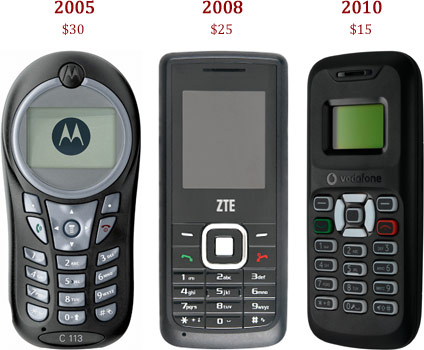
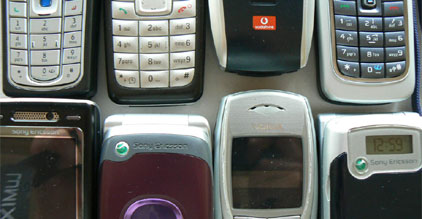
Freedom Fone has focused on the mobile phone as the medium of communication because according to a UN report, 60% of the world’s population has mobile phones. By 2009 there were already over 4.5 billion mobile phone subscriptions in circulation and developing countries account for over two thirds of these mobile phones. In contrast only 25% of the world’s population has internet access and in Africa there is only a 6.8% internet penetration rate. Thus the wide use of mobile phones bridges the chasm between the haves and the have nots. Their use cuts across the ‘digital divide’ and they have the potential to act as information access equalizers. For example, in Zimbabwe, barely 5% of Zimbabweans have access to the internet but there are over 3 million mobile phones contracts in a country of 11 million, which represents a penetration rate of roughly 27%. In South Africa – which offers a good indication of future development patterns in Africa – only 7% of the population has internet access, but there are approximately 36 million active cell phone users, which is roughly 80% of the population.
To address the limited access to and the high cost of internet connectivity in many developing countries, Freedom Fone has been designed so that it does not require any access to the internet to function. The Freedom Fone server can be connected to mobile phone SIM cards, landlines and Voice over Internet Protocol (VoIP) numbers. Callers can phone in from a landline, basic mobile phone, or soft phone like Skype. If uninterrupted power is provided, the system can be available to callers 24 hours a day, providing a valuable information on demand channel, as well as a vehicle through which the public can contribute information or queries 24/7.
A number of Freedom Fone’s core features focus on interactive voice menus and callback functionality. By consciously marrying the mobile phone with IVR, Freedom Fone extends this previously business-oriented tool, into the arena of social development and social media. By simplifying the user interface and minimizing the technical alternatives, we predict that information providers will find building voice menu-based information services intuitive rather than intimidating and cost-effective rather than costly.
Providing an alternative to the limitations imposed by the 160 characters allowed in an SMS is likely to be liberating. Freedom Fone provides a do-it-yourself platform for increased two way communication, facilitating the contribution of rich audio files by both the operator and caller. Its audio orientation offers similarities with radio programming – however there are dramatic differences in the start up costs, required technical know-how and government regulation. It is interactive as it enables end users to become information providers by contributing questions, audio content and feedback in response to the voice menus. Audio files also have the enormous benefit of surpassing the issues of literacy, going beyond language differences, as people can create and manage information in their own dialect. For deployments in Africa, audio is also strongly aligned with the oral traditions of story-telling.
Importantly, Freedom Fone has been designed to run on and with low-powered equipment to facilitate its deployment using solar power.
As Freedom Fone services the BoP, it is essential that deployments offer affordable, cost-effective access to information. Sadly, in Zimbabwe the cost of local mobile calls is $0.25 per minute making call-in costs a major challenge for local deployment. The same hurdle does not exist for deployments in East Africa where competition exists between mobile network providers and call costs are minimal. In countries where Voice over IP (VoIP) is legal further opportunities pertain, as VoIP cuts costs and facilitates scalability.
The Freedom Fone platform offers the potential for cost recovery through advertising which can be incorporated into the voice menus as short audio clips. Another option are premium numbers which can be negotiated with mobile network operators. In time we hope to source funding to build features that facilitate micro-payments for accessing voice menu content or receiving SMS updates.
Freedom Fone aims to put information in the hands of the public by simplifying and popularizing information outreach via IVR and SMS. It is a tool for content creation, by the people for the people. It shifts BoP solutions beyond profits, by giving the punch of informative power to the people”.
Amy Saunderson-Meyer
Media and Information Officer
The Kubatana Trust of Zimbabwe and Freedom Fone
www.freedomfone.org