Coffee, Clark, Careers

All great journalists immediately put you at ease. Clark Boyd, someone I’ve been extremely fortunate to have spoken to on a number of occasions, is one of them. Interviews feel more like chats over cups of coffee in the dentists waiting room than recorded interviews set to go out over the airways in the US (and beyond).

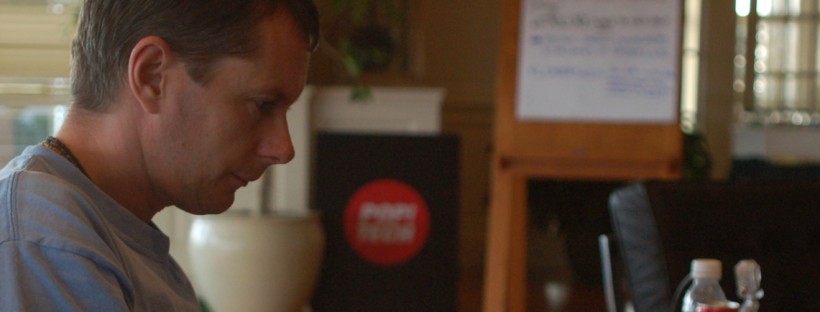
Ken Banks, kiwanja.netClark recently got in touch and asked if I’d be interested in giving a little careers advice – not to him but to people interested in mobile, technology, Africa and so on. Never one to turn down the opportunity, we recently sat down for coffee at my village dentist and chatted over coffee. Since these are the kinds of questions I regularly get asked by students and others interested in my work, it seemed sensible to re-post it. So, here you go. Apologies for Clark’s choice of picture. The original post is here.

Ken Banks: Cell Phones on the Frontlines

I have to say, this Wide Angle assignment was a tough one. In my nearly 6 years of covering technology now, I have to say I’ve come across quite a few people who have very, very cool jobs. But few people with those cool jobs have the drive, energy and determination that the man at right does. This is Ken Banks, and his online home is kiwanja.net. The tagline for the site says it all: “where technology meets anthropology, conservation and the development.” Ken is as close to a true “renaissance man” that I’ve come across in my forays into technology across the globe. His interests seem as wide and varied as his abilities. And the fact that he’s managed to somehow combine those interests and abilities into a career is, even to this jaded journalist, inspiring.

I’ve done stories on a number of Ken’s efforts in the past few years. The one that really grabbed my attention is a project Ken’s been working on called FrontlineSMS. So, for this Wide Angle Podcast, I begin by asking Ken to describe FrontlineSMS in his own words.

(Clark’s podcast can now be found on the kiwanja “Audio/Video” page here)

(Picture comes courtesy of Ken’s friend, another guy with a cool tech job, Erik Hersman)
Having fun with the future

PC World

“Few companies innovate with the intensity and frequency of those working in mobile, and today’s present is a future that only a handful of people would have predicted just a few short years ago. While most of us happily soak up rampant innovation as mere consumers, a handful of people in the hallowed corridors of mobile R&D labs are already working on the next big thing – the phones we’ll be carrying around in our back pockets in 2012 and beyond”

Check out my latest PC World column for a few off-beat, random, fun thoughts on the future of mobile.

Hope meets phones.

It’s been another landmark day in the short history of FrontlineSMS:Medic. For those of you who don’t know, today saw the launch of their latest initiative – Hope Phones – which, generally speaking, encourages people to dig out their old phones and give them a new lease of life in the hands of a community health care worker (CHW) in a developing country.

Hope Phones

Hope Phones will make use of the nearly 450,000 cell phones discarded every day in the United States, and allows donors to print a free shipping label and send their old phone in to The Wireless Source, a global leader in wireless device recycling. The phone’s value allows FrontlineSMS:Medic to purchase usable, recycled cell phones for  health care workers. According to Josh Nesbit:

Hope Phones lets you give your old cell phone new life on the frontline of global health. That’s powerful. Just one, old Blackberry will allow us to purchase three to five cell phones for health care workers, bringing another 250 families onto the health grid via SMS. Old phones can help save lives

Why it’s not about the phones

What really excites me isn’t the simplicity of the idea, or the great execution, or the branding (more kudos to our good friends at Wieden+Kennedy), wonderful as all those things are. It’s not even the number of retired phones this could rejuvenate, or the impact that all of this could have on the ground, incredible as it promises to be.

No. It’s all about mobilisation. To take and adapt a phrase:

Never doubt that a small group of thoughtful, committed students can change the world. Indeed, it’s the only thing that ever has

FrontlineSMS:Medic, and Hope Phones, has come out of nowhere, and it’s challenging our perceptions of what’s possible. Sure, global health is a seriously big beast to deal with, and few of us – if any – will ever have the muscle needed to tackle that particular monster. But that doesn’t mean we shouldn’t do anything. Indeed, there is a lot we can do.

Photo: Mobiles in Malawi/Jopsa.org

Talk is cheap

While large multinational donors and governments battle it out, dotting the i’s and crossing the t’s, people need help. Every day. These people can’t wait. And people like Josh, who have spent time on the ground understanding how rural hospitals tick, know all-too-well the impact that a simple cellphone can have in the hands of a committed CHW. With little more than passion, drive and an amazing ability to mobilise and motivate, Josh has pulled together an incredible team of equally committed individuals – students – from universities all across the United States. While adults generally critique and find reasons not to do things, they’ve gone out and done.

We all know what we can’t change. The real challenge therefore is not only figuring out what we can, but acting on it. Talk, like politics, is cheap. Lives are not.

It’s about time we challenged old models. And that time is now.

@twitter meets @frontlinesms

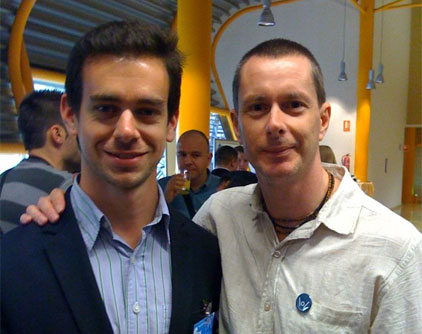
@jack – inventor, Founder and Chairman of Twitter – meets up with @kiwanja – developer of FrontlineSMS – at the “Symposium on Technologies for Social Action” (e-STAS) conference in Malaga last week, where they both spoke about elements of citizen empowerment.

Twitter and FrontlineSMS

In their quest for globally-available, affordable (free!) text messaging, the Twitter folk are not alone, but unlike their non-profit counterparts Twitter are beginning to win the battle of nerves with the operators (expect to see free messaging slowly come back over the coming year). NGOs the world over can only dream of having this kind of clout, although it was interesting comparing the Twitter experience with that faced by FrontlineSMS users and the wider NGO community.

It’ll be interesting to see where the Twitter Foundation might go with this, if and when we ever see one.