Time to be true to ourselves

Less than a week into my latest job search I repeated one fatal mistake, a mistake I’ve made over and over again over the years. You probably have, too.

Except this time I took a step back, recognised it, and put it right.

What am I talking about? That relentless career/salary progression thing, that’s what. The idea that your career, while it may not follow a beautiful straight line, is somehow meant to keep pointing up, keep getting better.

You know, that ‘Supervisor’ to ‘Assistant Manager’ to ‘Manager’ to ‘Director’ to ‘Senior Director’ to ‘C-suite’ progression thing. And the better and better salaries that go with it. There’s an insane expectation, and sometimes pressure, for us to try and steer our careers along this path. And it makes no sense, no sense at all.

The mistake I made after just a few days into my latest search was to focus my time on well-paid, senior roles. You know, ticking that top tier salary box on Guardian Jobs, then selecting the most senior job categories, and then seeing what comes out – and realising that all of the results are the kinds of jobs I’d never, ever want to do any more. I’m just being honest.

Years ago I’d have probably just gone with it, and most likely ended up working somewhere I’d find deeply frustrating, overly bureaucratic, and a creative thinking graveyard. But hey, the salary would have been good, so the price is worth paying, right?

Wrong.

Since early March I’ve been doing a lot of thinking. Dangerous, I know. Never before have I given myself this much time to seriously ponder what a late career/life reboot might look like for me. But I’ve been reading a lot, hoping to get a few ideas. ‘Four Thousand Weeks‘ (by Oliver Burkeman) and ‘From Strength to Strength‘ (by Arthur Brooks) have been two of the best books I could have ever read. Few recent books have altered my thinking more than those two have.

The end result of all of this is that I’ve stopped chasing senior roles, stopped chasing titles, and stopped chasing big salaries. In my case at least, it’s really not worth it. I want to jump out of bed in the morning with a spring in my step, to do work that makes me sing, and do the kind of work that my kids would be proud of. And if the money doesn’t quite stretch to all the things we used to be able to do, then so be it. We’re doing okay. I’ve always been nothing if not resourceful.

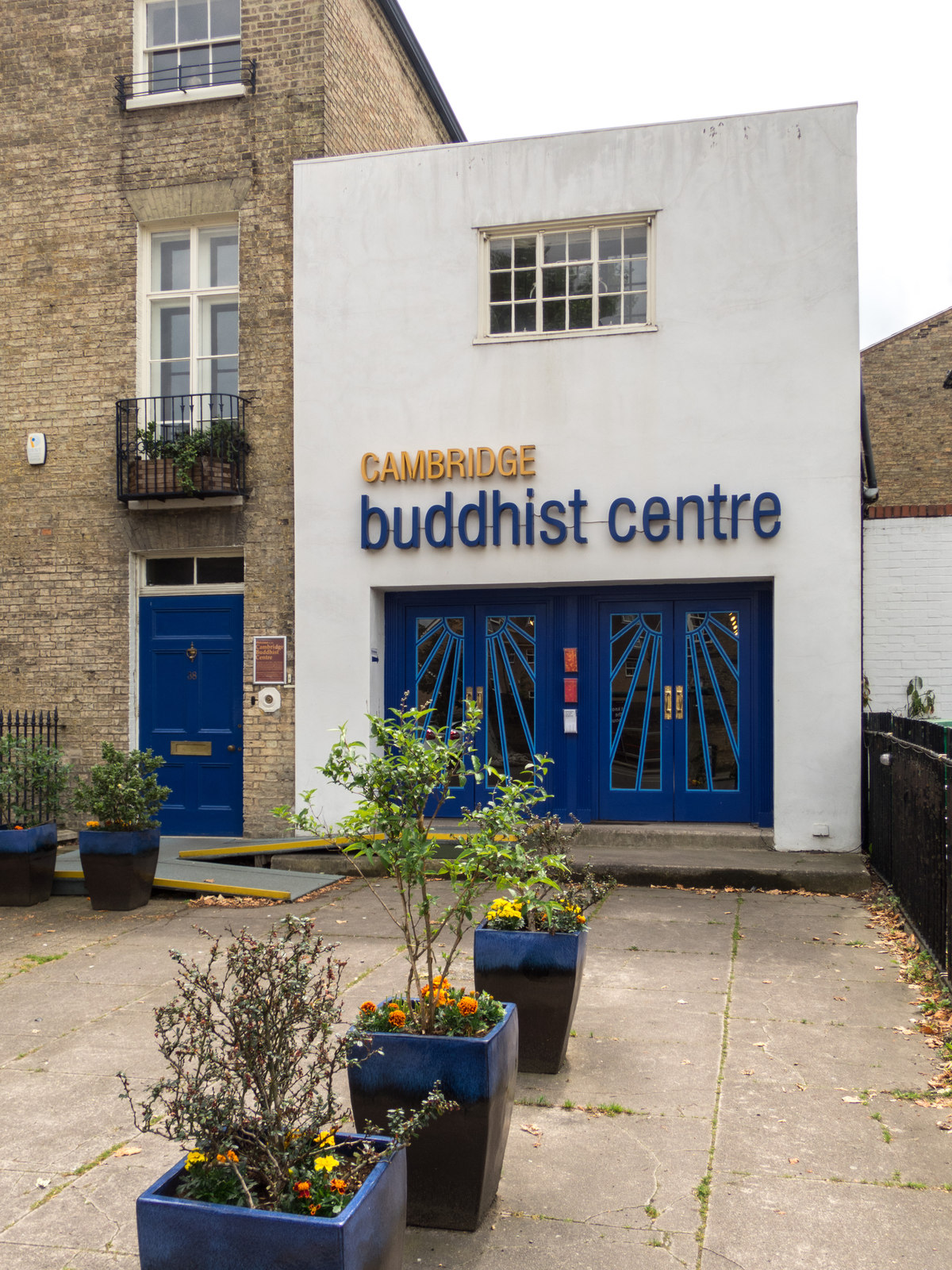
Despite the uncertainty, I’m probably more excited now than I have been in a long time. I’m taking control of the huge chunk of my life that I’d usually hand over to an employer. As Buddha tells us, we really ought to seek the ‘right livelihood‘, work which doesn’t do harm to ourselves or others, and is ethically positive,

Too many people are unhappy in their work, and in my book that counts as harm – to themselves. We keep hearing that we should ‘bring our authentic selves’ to work. But how many of us really do?

“Knowing others is intelligence. Knowing yourself is true wisdom”Lao Tzu

Back for good

Well, perhaps not for good, but for a while, anyway. Let’s see how things go.

After an incredible 15 years, kiwanja.net shut its doors in April 2018 and I took on a full-time role at Yoti, a digital identity start-up based out of London. I blogged about the career change here. Just shy of five years later, my Head of Social Purpose role was made redundant, and I joined Macmillan Cancer Support on a one year contract as Director of Future Data & Digital Self Management. That contract came to an end in March 2024, and I decided to take some time out to reflect, breathe, and think about what might be next for me.

In a sense, despite having a significant body of work behind me and, dare I say it, a fairly good reputation, it does feel like I’m starting all over from scratch. While I miss the crazy, explosive, experimental, anything-goes days of the so-called ‘mobile revolution’, today that world feels overly professionalised, overly tech-focused, rigid, and less experimental (and certainly more competitive). The bits I miss most no longer exist. Many of the early pioneers have moved on, too – just like I did. Life goes on, I suppose.

Unsure of what might be next, I decided a few weeks ago to try and take a break – something that doesn’t come naturally to me, I have to say – and let the universe decide what direction I should take. It was the universe, after all, that gave me FrontlineSMS, so it’s got pretty good form.

And, right on cue, the universe spoke.

One thing I’ve enjoyed over the years has been coaching and mentoring. I’ve done more than my fair share, but it’s always been informal, ad-hoc and on-demand. I also love brainstorming ideas, sharing thoughts and insights, and challenging ideas (in a kind, productive way), all under the umbrella of supporting the next generation of social innovators. The internal drive to focus more of my time on this just wouldn’t go away and then, out of the blue, I was approached by a friend and colleague from my mobile days. A few weeks later and I’d secured work doing precisely what it feels like I should be doing. More on that soon.

After an at-times-uncomfortable few weeks waiting for things to fall into place, they have.  On top of the new coaching contract, I’m about to start working with the University of Cambridge Department of Engineering, mentoring a team working on a tech-for-democracy project. And I’ll be helping judge the International Federation of the Red Cross’s Youth Innovation Academy, too.

I’m excited by what lies ahead. I know I’m going to enjoy it. It feels right. And I think I’m good at it. Remember to check out my Inspiration for hire website if you think there’s something amazing we could do together.

I’d love to hear from you if there is.

Losing my religion

It is with a little sadness – but great excitement – that I write this, my last-ever kiwanja.net blog post. As from today the site will no longer receive updates as I take on a new full-time role at Yoti, a London-based startup, as its Head of Social Purpose. It needed a special opportunity to take such a leap, and that’s exactly what I got. (Update: I left my role at Yoti in December 2022).

Fifteen years ago this January I hobbled my way to Cambridge, on crutches after breaking a leg in Nigeria three months earlier, and took on a piece of work I wasn’t sure I could deliver. My concerns were unfounded, and that nine month contract ended up launching kiwanja.net and a lengthy and rewarding career in mobiles-for-development.

Bushbuckridge, South Africa (2003). An early frontier of mobile exploration. Photo: Ken Banks

A guiding principle in everything I’ve done since has been to take on work only if I feel I can add value. This approach, although ethically sound, does come with its challenges and requires a steady stream of engaging work, with a clearly defined role. There’s plenty up for grabs out there but for the most part I can’t see where I can add value – or I disagree with the aims of the work.

Last year was a particularly hectic one but this year has been quite different. While there are plenty of opportunities out there, few make best use of my skills or approach, and many I have issues with (think top-down, inappropriate technology, huge budget, innovation-for-innovations sake, tech-first and people-last, and so on). I find it very hard to motivate myself to do anything when it goes against the very approaches I’ve championed over the last fifteen years or so.

I’d rather have no work than the wrong work, but crucially I now have a young family to support. Lean spells as a consultant don’t cut it any more. Just as in 2012 when I stepped back after building FrontlineSMS from nothing, this year it feels like the universe is telling me something. And when the universe speaks, I listen.

So, as from today I’ll be closing the kiwanja.net chapter of my personal and professional life (I’ve always struggled to separate the two) and will be moving on to a new and exciting role in the corporate sector.

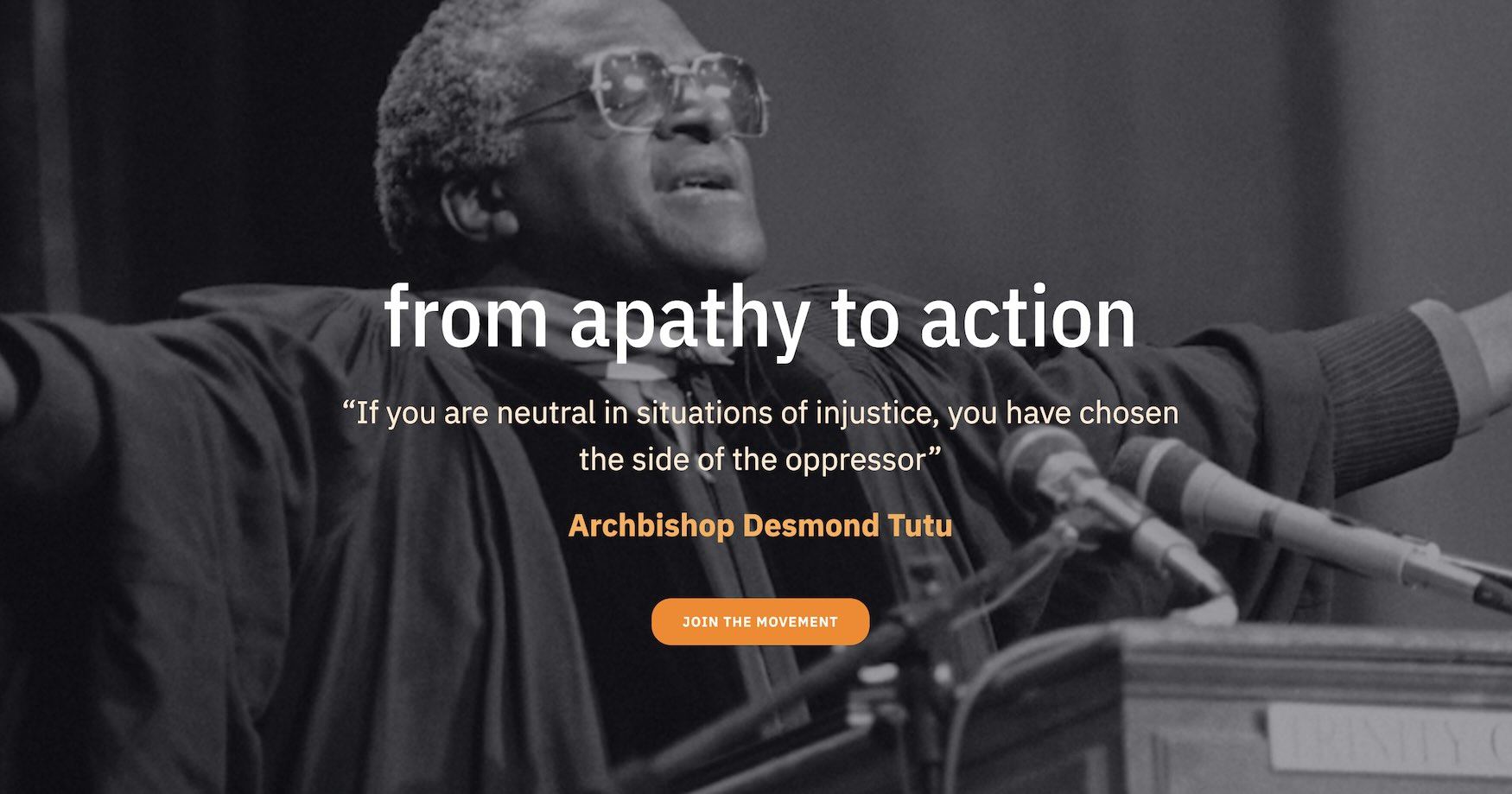
I’m more excited than sad. Sometimes things just run their course and we need to know when to let go. In 2003 I helped launch an amazing conservation portal across the Vodafone network, and since then have consulted with many amazing organisations, worked in many wonderful places with even more wonderful people, developed a (what I still consider) best in class offline mobile tool in FrontlineSMS, lived in a van at Stanford University, published two very well received books, raised lots of philanthropic funds and private investment, spoken at events all over the world, sailed half way around it with Archbishop Desmond Tutu and flown all the way around it with National Geographic Expeditions. And on top of all of that, along the way I’ve won more awards and recognition than I ever imagined possible. Who can look back at all of this with anything other than pride and a sense of joy?

An exciting new journey in digital identity awaits

From Monday I begin the next chapter in my journey as I take on an amazing role at Yoti as their Head of Social Purpose. Yoti have developed a range of digital identity solutions which have enormous global development and social impact potential, and I’ll be working with them to help make sure we make the very best of the opportunity. So, although I’m moving into the corporate world I’ll still be making good use of my decades of experience, and my address book, but doing it from the perspective of a for-profit company with a product rather than an NGO with a grant.

The kiwanja.net website will remain so that my children will get to find out what their father did during the first few years of their lives – and a little bit before – and as testament to a very productive fifteen years of my own life.

As for highlights during those fifteen years, I’d have to say the collection of writing that captures most of my thinking over that time, a recent talk about social change in Munich which explains why development is so personal to me, and a project which turned out to be my last big effort to capture all that’s wrong in our sector, with suggestions on how we might put some of it right. Plus, of course, my talk at National Geographic – a massive privilege and career highlight – in which I shared the making of FrontlineSMS, a project which took up eight years of my life, and which probably saved me.


Collection of writing   |   Buy on Amazon ($1.99)   |   Download free PDF (8 Mb)


Munich talk on paying attention   |   Watch on YouTube   |   Watch on kiwanja.net


A manifesto for change in tech-for-development   |   Hacking Development


Talk at National Geographic   |   Watch on National Geographic   |   Watch on kiwanja.net


So, a very big thank you to everyone who has been a part of my journey, and to all the friends I’ve made along the way. Of course, this doesn’t have to be the end. If you’re interested in the challenges and opportunities for digital identity in global development and social innovation, you’re welcome to join me – check out the Yoti website and my Contact page for details. I’d love to work with some of you again.

See you on the other side.

Why we need more anthropologists

Today I’m back at the University of Edinburgh talking to anthropology students about how I’ve used my degree in my global technology/development career. I can’t overstate how refreshing it is to speak to a room not obsessed with technology, or scaling projects, or measuring impact. For me, it’s always started with the people and, for everyone in the room, it will be the same. I’ve long advised people interested in a career in global development to study anthropology (better still, anthropology with development studies, as I did at Sussex University).

It may sound crazy, but there aren’t enough people focused on understanding people in the technology-for-development world (one week field trips carrying out surveys don’t count). You see plenty of ‘Technology Advisor’ roles, but where are the ‘People Advisors’? There’s plenty of everything else, just not enough of that. I’m currently looking at work opportunities in the technology-for-development sector, and don’t think I’ve seen a single job description define a major requirement for time spent in the field, understanding the context of technology use in global development. And, of course, no mention of the word ‘anthropology’ anywhere. Everything else seems to matter more than that, and it’s something we have to put right. Anthropology has a huge amount to offer the sector – it just doesn’t seem to know it yet.

A question that I often get asked when people get over the shock that I have an anthropology degree, not something computer science-related, is “What on earth would anthropologists be doing playing with mobile phones?”. The answer may be a little more obvious than you think, but let’s start at the beginning.

Anthropology is an age-old, at times complex discipline, and like many others it suffers from its fair share of in-fighting and disagreement. It’s also a discipline shrouded in a certain mystery. Few people seem to know what anthropology really is, or what anthropologists really do, and a general unwillingness to ask simply fuels the mystery further. Few people ever question, for example, what a discipline better (but often incorrectly) ‘known’ for poking around with dinosaur bones is doing playing with mobile phones and other digital devices.

What anthropology isn’t

The public face of anthropology likely sits somewhere close to an Indiana Jones-type character, a dashing figure in khaki dress poking around with ancient relics while they try to unpick ancient puzzles and mysteries, or a bearded old man working with a leather-bound notepad in a dusty, dimly lit inaccessible room at the back of a museum building. If people were to be believed, anthropologists would be studying everything from human remains to dinosaur bones, old pots and pans, ants and roads. Yes, some people even think anthropologists study roads.

Despite the mystery, in recent years anthropology has witnessed something of a mini renaissance. As our lives become exposed to more and more technology, and companies become more and more interested in how technology affects us and how we interface with it, anthropologists have found themselves in increasing demand. When Genevieve Bell turned her back on academia and started working with Intel in the late 1990’s, she was accused of “selling out”. Today, anthropologists jump at the chance to help influence future innovation and, for many, working in industry has become the thing to do.

What anthropology is

So, if anthropology isn’t the study of ants or roads, what is it? Generally described as the scientific study of the origin, the behaviour, and the physical, social, and cultural development of humans, anthropology is distinguished from other social sciences – such as sociology – by its emphasis on what’s called cultural relativity, the principle that an individuals’ beliefs and activities should be interpreted in terms of their own culture, not that of the anthropologist. Anthropology also offers an in-depth examination of context – the social and physical conditions under which different people live – and a focus on cross-cultural comparison. To you and me, that’s comparing one culture to another. In short, where a sociologist might put together a questionnaire to try and understand what people think of an object, an anthropologist would immerse themselves in the subject and try to understand it from ‘within’.

Anthropology has a number of sub-fields and, yes, one of those does involve poking round with old bones and relics. But for me, development anthropology has always been the most interesting sub-field because of the role it plays in the gobal development arena. As a discipline it was borne out of severe criticism of the general development effort, with anthropologists regularly pointing out the failure of many agencies to analyse the consequences of their projects on a wider, human scale. Sadly, not a huge amount has changed since the 1970’s, making development anthropology as necessary today as it has ever been. Many academics – and practitioners, come to that – argue that anthropology should be a key component of the development process. In reality, in some projects it is, and in others it isn’t.

The importance of KYC (Know Your Customer)

It’s widely recognised that projects can succeed or fail on the realisation of their relative impacts on target communities, and development anthropology is seen as an increasingly important element in determining these positive and negative impacts. In the consumer electronics sector – particularly within emerging market divisions – it is now not uncommon to find anthropologists working within the corridors of hi-tech companies. Intel, Nokia and Microsoft are three such examples. Just as large development projects can fail if agencies fail to understand their target communities, commercial products can fail if companies fail to understand the very same people. In this case, these people go by a different name – customers.

Selling phones as torches in Uganda. Photo: Ken Banks

The explosive growth of mobile ownership in the developing world is largely down to a vibrant recycling market and the initial arrival of cheap $20 feature phones (and now $75 smartphones), but is also down in part to the efforts of forward-thinking mobile manufacturers. Anthropologists working for companies such as Nokia spend increasing amounts of time trying to understand what people living at the bottom of the pyramid, or those with very limited disposable income, might want from a phone. Mobiles with flashlights are just one example of a product that can emerge from this brand of user-centric design. Others include mobiles with multiple phone books, which allow more than one person to share a single phone (a practice largely unheard of in many developed markets) and phones which hold multiple SIMs.

My anthropology journey

My first taste of anthropology came a little by accident, primarily down to Sussex University‘s policy of students having to select a second degree subject to go with their Development Studies option (this was my key interest back in 1996). Social anthropology was one choice, and one which looked slightly more interesting than geography, Spanish or French (not that there’s anything wrong with those subjects). During the course of my degree I formed many key ideas and opinions around central pieces of work on the appropriate technology movement and the practical role of anthropology, particularly in global conservation and development work.

Today, mobile devices are closing the digital divide in ways the PC never did. Industry bodies such as the GSM Association, who have previously run Bridging the Digital Divide initiatives, today remain extremely active in the mobile-for-development sector. International development agencies pump hundreds of millions dollars into economic, health and educational initiatives centred around mobiles and mobile technology. Mobile phones today are almost as exciting as big data, 3D printers and drones.

I’m immensely proud of my anthropology roots, and the insights it has given me in my work. Without it, I’d not have successfully conceived and developed FrontlineSMS. I’m also very proud with my ongoing association with Sussex University in my capacity as Ambassador for International Development.

And I’m always happy to do my part to promote the discipline in the technology-for-development world because I think it needs more – many more – anthropologists walking the corridors if it’s to take full advantage of the wonderful digital opportunity it has been given. I just hope it starts paying attention before it’s too late.