
Month: June 2009
The making of an SMS icon
Running social mobile tools through the global branding machine might not seem like an obvious thing to do, but done right it can lead to some surprising – and unexpected – results. This is our story.
 “Branding was the last thing on our minds. It was October 2007 and we were knee-deep building out the alpha version of the revamped FrontlineSMS. I’d just taken a phone call from Wieden+Kennedy (W+K), a global branding giant with the likes of Nokia, Nike and Google on their books. Renny Gleeson – W+K’s Creative Director – had stumbled into what we were doing via our Social Mobile Group and wanted to see if they could get involved. I’ll never forget the first five words he said to me (they sadly can’t be repeated here).
We were still evaluating tenders from a range of web design companies in the Bay Area, but Renny was insistent that the job of building the FrontlineSMS website and brand had their name written all over it. It turns out he was right.
I never expected in my wildest dreams to end up working with some of the most talented brand experts in their field. If we’d gone our own route then our logo would likely have ended up as a picture of a mobile phone with the words “FrontlineSMS” underneath (this accurately describes our first effort, although it did help as a starting point for the W+K team). Early ideas – straight off the bat – looked like this.
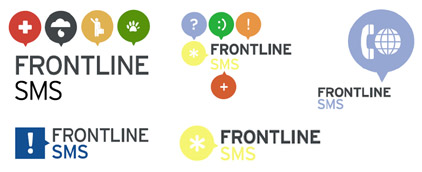
It was a fascinating and evolving process, and one which eventually lead to a short list of keywords which we felt best described what lay at the heart of the software. One stood out – one which not only happened to be central to the early FrontlineSMS thinking, but one which came through strongly time after time in email messages from the growing community of users. And that word?
Empowerment.
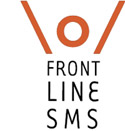 Empowerment is hugely personal and emotive. It’s also something often expressed physically, and how to graphically represent this ‘physical expression of empowerment’ became a key theme as the logo continued to evolve. The neat concept of a ‘textable logo’ was also beginning to emerge, something which was to later prove something of a masterstroke.
According to Kelly Wright, a member of the W+K team:
We collectively focused in on the ‘textable logo’ concept because it spoke to the FrontlineSMS technology, and being purely visual, could be language independent. The challenge then became how to convey ’empowerment’ through this pared down form
The ‘\o/’ form had history, as Renny learned when he first shot the concept through to me on Skype. Check it out for yourself – it’s a Skype emoticon shortcut, and when we saw what it generated, we were both sold on the unexpected – but hilarious – additional layer of meaning.
Renny had this to say about the overall design experience:
Ken built FrontlineSMS out of love, faith in human potential, and an inspired application of mobile technology. And you can feel it when you talk and work with him. At W+K, while we have the privilege to work day in and day out on some pretty impressive brands, the chance to help craft the visual language and web experience for Ken’s creation was uplifting. From our first conversation with Ken, W+K has felt like a part of the extended FrontlineSMS family
And talking of family, something else very interesting has been happening. Something quite unexpected.
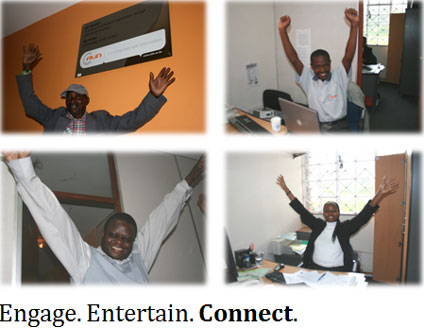
Today, as the FrontlineSMS software finds its way into more and more pairs of hands – currently 2,452 and counting – users have started sending in pictures of themselves, their teams and their community members replicating the FrontlineSMS logo, just like the ones above. I’m not quite sure what this means, but perhaps it’s yet another sign that we’ve been able to take engagement and ownership to an entirely new level.
A few of the earlier (staged) photos are available on Flickr, including this one by Erik Hersman, below, which has become something of a “poster shot” for the icons phenomenon.

Branding social mobile tools is a relatively new concept – there is no manual, after all. Many people are still learning on their feet – us included – and what has happened here is just one of the many reasons why we, and others, are finding this space so exciting to work in.”
Where compliance is king
This is the ninth in our series of FrontlineSMS guest posts. In this latest post Aurelio Gomes, who works out of Universidade Catolica de Mocambique, explains their use of the software in monitoring and improving anti-retroviral treatment (ART) compliance among rural communities in Mozambique
Thanks to the US President’s Emergency Program for AIDS Relief (PEPFAR), increasing numbers of HIV-infected people living in poor countries have been given access to anti-retroviral therapy (ART). Successful treatment of HIV depends upon ART recipients maintaining a compliance rate of 95% or higher to prevent the emergence of drug resistance. The commonly used first-line regimen has a low genetic barrier to resistance when dosing is below recommended levels. Not only does widespread resistance lead to a need for costly second-line regimens, but it also threatens to reverse ART survival gains. Worst still, resistant HIV may also be transmitted to others, severely limiting treatment options.
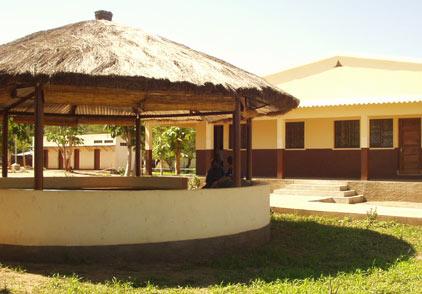
As ART therapy becomes more widely prescribed in Sub-Saharan Africa, suitable systems to ensure patient compliance have to be designed and implemented to maximize ART effectiveness. This is especially necessary in rural areas of Africa. Mozambique exemplifies this situation since 80% of the total Mozambican population are rural. Patients are difficult to locate because formal postal addresses don’t exist in these areas. As in many parts of sub-Saharan Africa, residents are not connected to the electricity grid, and lack regular phone service or access to clean water. Stigma and discrimination increase the challenge of ensuring compliance, as HIV- positive individuals are often very concerned about their privacy.
Following initial technical assistance from our partners at Inveneo, we have been successfully using FrontlineSMS for several months to facilitate communication between the HIV treatment centers and the community health care workers (CHWs) deployed in remote rural areas. These CHWs are armed with mobile phones, enabling communication to flow more quickly and accurately, leading to an improvement in health care delivery.
Our FrontlineSMS-driven communication system is helping us maintain a 95% and higher compliance of ARV therapy, crucial for the patient, the success of our programme and efforts to reduce the chances of development of drug-resistant strains of the virus.
Aurelio Gomes
Project Coordinator
Universidade Catolica de Mocambique
www.ucm.ac.mz
Focus on the users, and all else will follow
If we were to have a mantra on the FrontlineSMS project, it would be this: “Focus on the users, and all else will follow”.
From the very beginning we’ve been unashamedly focused on servicing the needs of our growing NGO user base. Much of the advanced functionality you see in the software today has been requested by users over the course of the last four years, and much of the feature request list we’re working through today is based on feedback received since the major MacArthur-funded re-launch last summer. Our focus on the user is beginning to pay off, with well over 500 members actively engaged online. Although we’re excited with our progress, we’re far from complacent and there’s much more we need to, and can, do.

With growing numbers of these users actively engaging online, others have started contributing their own stories on how they’re applying the software in their social change work. All that remains now is the creation of the second part of the community puzzle – this time for developers.
With invaluable support from our friends at the Open Society Institute (OSI) and the Free Software Foundation, last autumn we finally solved some lengthy and complex licensing work with the FrontlineSMS code. With a number of educational establishments, NGOs and individual developers keen to begin work, we pushed the code out on SourceForge, posted a community blog entry a little later, and got on with improving functionality and providing continued frontline technical support to the NGO user base.
Although some early partners have already started working with the code, we’ve been holding back on an official announcement until we have everything in place – IRC, mailing lists, documentation and processes, for example – and the code is in the best possible shape for people to work with.
Earlier last month we started working with Aspiration Tech in San Francisco, who will be responsible for helping build the community. Our own developers, a number of users, and other volunteer programmers are all incredibly excited to be working with Aspiration, who are experts in the field. We’ll make an announcement once we’re good to go.
Although there is considerable buzz and excitement around mobile technology and source code at the moment, we’ve been firm believers that the users come first. Without them you have no project, no community. Only now, after increasing numbers of this first community – the users – begin to apply the software in exciting and innovative ways, is everyone ready – developers included – to tackle the second.