
Three weeks ago we announced that I was stepping down from day-to-day operations at FrontlineSMS to hand over to a new senior management team. It’s clear from the success of the global launch of version 2 of the software over the past week that FrontlineSMS is in safe hands, and the reworked software, outreach and launch were all handled by the team with little involvement from me. It was great to see all their hard work come together, and I congratulate everyone on a job extremely well done. \o/
As I mentioned in my recent post, I’ll remain involved with the project and will continue to support innovation and entrepreneurship in the developing (and developed) world, will continue to write about technology and Africa, and will continue with mentoring and speaking. The ICT4D and social innovation fields continue to fascinate and inspire me as much as they did all those years ago when I started out, and I’ll remain involved as long as I continue to add value.
Introducing “Means of Exchange”
So, what else will I be working on? Well, for the past two years I’ve been taking an increasing interest in economic resilience, particularly how technology might help buffer local communities from global economic downturns. Ironically, since I started my research the world has entered a period of growing economic uncertainty. The causes – although fascinating – don’t so much interest me, more the response at local, grassroots level.
As we all know, in times of hardship people tend to become increasingly innovative. As Greeks have found themselves with less and less cash in their pockets, many have turned to bartering. It’s how communities react to economic shocks that I’ll be focussing on, and how tools like bartering, swapping, LETS schemes and local currencies are applied and deployed in response.
We pay too little attention to the reserve power of the people to take care of themselves. We are too solicitous for government intervention, on the theory, first, that the people themselves are helpless, and second, that the government has superior capacity for action. Often times both of these conclusions are wrong
Calvin Coolidge
It’s only when things go wrong that we question the systems which regulate, control and dominate our lives. We enter 2012 at a time of great economic uncertainty. Millions of people around the world have lost jobs, homes, businesses, independence and purpose. Millions more face growing uncertainty and insecurity. Many hard working people have been hard hit. In the greater scheme of things they’re simply collateral damage in the rebalancing of a larger, broken world economic system.
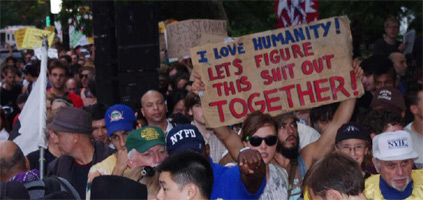
While it’s impossible for most of us to remove ourselves entirely from the world economic system, there is a lot we can do to lessen our dependence on it. Funnily enough it’s something our ancestors managed to do pretty well. It’s called self-sufficiency.
For the majority of people, self-sufficiency conjures up images of grow-your-own vegetables on village allotments, but more meaningful economic self-sufficiency is possible if people are creative in how they earn, trade and share with one another. As money has taken over as our primary means of exchange, other more traditional methods have been lost.
What we’ve been left with is an economic system we have little control over, a loss of community and a drift away from the consumption of locally produced goods and services.
But all is not lost. This can be halted, and by using the very technologies which enable us to take part in a globalised society, it can be reversed. If you’re interested in learning more about methods of economic self-sufficiency, or you’re interested in tools and resources to make it happen, then Means of Exchange is for you.
Firstly, the website will focus on how emerging, everyday technologies can be used to democratise opportunities for economic self-sufficiency, rebuild local communities and promote a return to local resource use.
Secondly, if they don’t already exist, we’ll build you the tools so you can make it happen wherever you are. Our first flagship “app” will be released within the next few weeks.
To keep up-to-date with new releases and latest news, check us out via:
- Our website: http://www.meansofexchange.com
- Twitter: @MeansofExchange
- Facebook: http://www.facebook.com/meansofexchange
See you on the other side.

