Innovation: Beyond technology.

Last week we made one of the most important announcements in the near-seven year history of FrontlineSMS. As I hinted in my “Rolling Stones School of Management Innovation” post last December, I only felt able to take the project to a certain level and that it required different people with a different set of skills to move it to the next. Last week, with that internal transition complete, we announced that I’d be stepping aside to concentrate on other things, and FrontlineSMS would move forward in fresh hands.

Laura Walker Hudson and Sean Martin McDonald will now drive the project forward as CEO’s of our US Foundation and UK Community Interest Company respectively. You can read their thoughts on the transition, and what they have planned, in their follow-up post here.

Many wonderful messages of support flooded in in the form of Tweets, direct messages, blog comments, emails and – of course – text message. The transition announcement was amazingly well received and the response overwhelmingly positive. Many people commented that the move was “incredibly brave” and “must have been difficult” but as I mentioned in the announcement, I felt it was neither. As I said then, I’ve always maintained that it’s just as important to be aware of your limitations as your strengths, and stepping aside in these circumstances is the clearest indication I can give that I do.

There haven’t been many transitions like this in the m4d or ICT4D worlds that I know of, and if that’s the case it reinforces our commitment to not only be innovative with technology but innovative organisationally, and to also always act in the best interests of the project rather than ourselves. FrontlineSMS, as with many other ICT4D projects, is bigger than one person. I’m excited to see where FrontlineSMS goes from here, and I’ll follow and support it in my new capacity as Chairman of the Board with the same commitment and enthusiasm as I did from my one bedroom flat in Cambridge, or VW Camper at Stanford.

Alongside the congratulatory messages a few people wished me luck and said they hoped to still see me on the innovation, technology, mobile or African scene. Well, they will. I’m not retiring, just handing over the reins at FrontlineSMS. I’ll continue to write, blog and speak about technology, innovation and social change, and maintain a focus on Africa as I’ve done for the past twenty years.

What’s next

As for what’s next, I’m excited that over the past few months I’ve been increasingly drawn into the wider world of innovation and entrepreneurship beyond my technology roots – speaking the other week at the Ashoka/Ben & Jerry’s “Join Our Core” event, for example, and next month spending time with BMW executives in Munich.

My writing has also started to gain traction beyond the news sites and journals which dominate our discipline, with a short guest piece in Wired Magazine last month. I’m also planning my first book which will focus on “reluctant innovation“, due out later this year. And I’m doing an increasing amount of mentoring with organisations such as Pop!Tech, National Geographic and the Unreasonable Institute, something that aligns perfectly with my long-standing commitment to “give back”.

Project-wise I have a long list of new ideas I’ll be working on. One is just a few weeks away from being ready, so I’ll save the official announcement for then. But in the spirit of my efforts with FrontlineSMS, the overarching focus of my work will continue to centre around how we best apply modern technology for social benefit, both in the developed and developing world. If anything, it’s the additional focus on the developed world which represents the biggest shift in my thinking.

In an effort to stay innovative and relevant, large companies are often encouraged to reinvent themselves. There’s no reason why this shouldn’t apply to individuals, too. The ICT4D sector has shifted focus considerably since I started out all those years ago. When the time is right, there’s no reason why some of the people in it shouldn’t do the same, either.

Further reading
ClearlySo featured our transition on their blog. You can read their excellent commentary here.

“Work. Life. Balance”. An interview with Voice America

Over the past few years I’ve given a fair few interviews, and have been grateful for the continued interest and enthusiasm from others for our work. Most interviews have focused on combinations of my time working in Africa, my technology interests, or the evolution and development of FrontlineSMS. Until now, none had asked me to go way back and talk about my background, family and upbringing, or dig deeply into what drives me and my work.

Last week, Kate Ebner on “Visionary Leader, Extraordinary Life” did just that. You can read the write-up below.

Finding What Lights You Up:  The Unassuming Wisdom of Mobile Innovator and Anthropologist Ken Banks

Ken Banks finished up his hour on our radio show and, moments later, tweeted “thanks for the therapy!” with a cyber smile. During his radio hour, Kate invited Ken to tell his life story at length for the benefit of our listeners. The story began in Banks’ childhood — in Jersey, England, one of the Channel Islands off the coast of Normandy, France. To date, it takes place in Africa where Banks is bringing mobile technologies to enable effective communications channels for communities in the developing world through his organization kiwanja.net and his free, open-source software FrontlineSMS.

Why did Kate invite Ken to spend so much of the hour telling his story? “Ken’s story is one of overcoming loss, uncertainty and adversity to find his path. He is an optimist with high standards for himself and the world. He hasn’t always been able to see how the pieces of his story quite fit together. We can relate to those feelings and circumstances. How Ken moves through life — the decisions that he has made and how he makes them — is so instructive and inspiring for all of us.”

Here are just a few of the wise nuggets that Ken Banks imparted during his hour on Visionary Leader, Extraordinary Life:

Everyone should be given a chance to maximize their potential. Inspire people to feel they have something to contribute to the world and help them find ways to make it happen. Read Ken’s blog post, “Enabling the Inspiration Generation.”

Just think about how you can help 4-5 people. You don’t need to save the whole world. If everyone helped just 4-5 people, the world would be a better place.

Anything is possible. Regardless of the cards you are dealt in life, pick yourself up and walk on. You don’t need parents in high places, or lots of money to make a difference in the world.

Do something that feels right. Don’t let others dictate your path. Only you will know what is right for you at any given moment in your life. If you feel good about what you are doing, don’t give up.

Make your own opportunities. If you haven’t found the one thing that immediately switches you on, get out and put yourself in the kinds of environments where you have a better chance of finding it. You won’t find it sitting at home and watching television.

Maximize every opportunity. You are only as good as the last thing you have done. It doesn’t matter that you gave a great talk last year – it’s all about the one you are doing now. If you give everything 100%, it will start to pay off and you will build momentum and people will want to support you and your ideas.

To hear more, listen to Ken’s interview (also available on the kiwanja.net website here).

This interview was in part dedicated to our Mother, who passed away one year ago last month.

Business by numbers: Entrepreneurship

Late Tuesday afternoon, while I was strolling through Ottawa International Airport on my way back from a conference, a magazine title jumped out at me from one of the airport newsagents. It was called Inc.

If I were asked to describe it, I’d say it was a bit like “Wired for entrepreneurs”. If you’re into business, startups, entrepreneurship (and, yes, social entrepreneurship) I’d say it’s a must-read. You can check out Inc.’s website here.

One of the many gems in the current March edition is this infographic, which I thought was well worth sharing.

Click here for a larger version, and while you’re at it go on over to the Inc. website and subscribe. I will be.

(Super) smart phones: The next frontier?

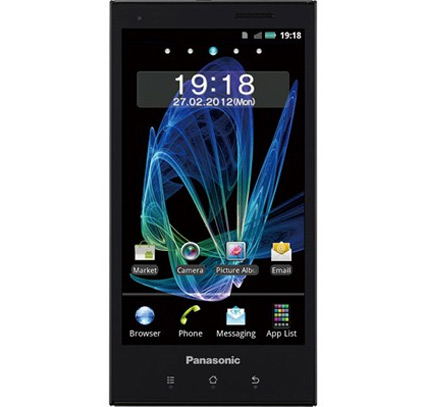
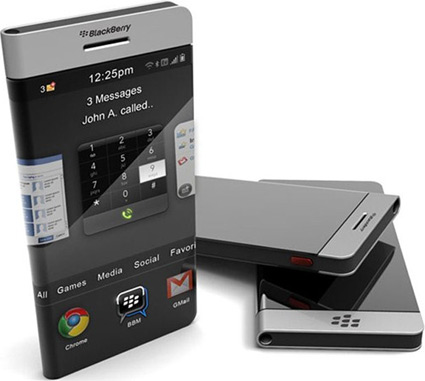
Today’s smart phones bear little resemblance to the phones of years gone by. With the arrival of each new model we’re stretched to think what else a phone might be able to do, and what manufacturers have planned for us next. The rate of innovation is staggering. Here’s a preview of a few phones some of us might get our hands on, and a brilliant-looking concept device which we may not.

Photo: LG

LG Optimus 3D Max
Glasses-free 3D screen


Photo: Panasonic

Panasonic Eluga Power
50% charging capacity within 30 minutes


Photo: Nokia

Nokia 808 PureView
41 megapixel camera


Image: John Anastasiadis / Yanko Design

Wraparound Blackberry
Concept BlackBerry with a smart wraparound display


Photo: Huawei

Huawei Ascend D Quad
Dolby 5.1 surround sound


For full details on these, and previews of a few more phones, check out the original MSN article here.