Closing mobile’s “gender divide”

At the Networked Society Forum in Hong Kong last November, I sat and listened as Jeffrey Sachs described mobile connectivity as “the single most important instrument for development that we have“. Few people would disagree. A recent study by the GSM Association reported a 10% increase in mobile phone use leads to a 1.2% increase in a country’s GDP. Encouraging as this may be, it’s only half the story.

Women in the developing world are 21% less likely than men to own a mobile, leaving an estimated 300 million excluded from the social and economic opportunities that owning one might bring. If mobile phones do increase opportunity, then right now they’re not increasing it for everyone. Closing this “mobile gender gap” doesn’t just make sense for women – it’s also an opportunity believed to be worth a staggering $13 billion to network operators annually.

Empowering girls and women has long been a focus for the development community, and it’s easy to see why. In Sub Saharan Africa women produce 80% of household food and, when educated women run family farms, they’re able to increase yields by up to 20%. Research also suggests that increasing the earning power of women has additional benefits for the entire family through improvements in health, education and child nutrition. And when educated girls start earning an income, 90% of it is put straight back into their families. The number is nearer 40% for men. Yet, despite all this in many parts of the world women are more likely to go hungry than men, the number of girls out of school almost universally exceeds the number of boys, and – in the case of Sub Saharan Africa – women own only 1% of the land.

Whilst the introduction of the mobile phone alone is unlikely to solve any of these problems directly, targeted interventions can. Defining this opportunity is crucial, according to “Mobile Value Added Services: A Business Growth Opportunity for Women Entrepreneurs,” a new report released today by the Cherie Blair Foundation for Women with support from the ExxonMobil Foundation. This milestone study is a major step for the Foundation – which tasks itself with helping women entrepreneurs across Africa, South East Asia and the Middle East – as it seeks to leverage the power of mobile phones and services for the women entrepreneurs its wider programmes support.

One key objective of the study, which focused mostly on Indonesia, Nigeria and Egypt, was to identify the most useful mobile value-added services which enable women entrepreneurs to advance their businesses. In the study, over 88% of women entrepreneurs said they were willing to use these services to address the core business challenges they face, and more than 82% of women entrepreneurs indicated a willingness to pay for them. Demand for the right service is clearly there. Identifying what those services should be was a key driver for commissioning the report.

Although mobile value added services were abundant in many of the areas covered in the study (over 200 different products were reviewed) surprisingly, none were tailored for the specific needs of women entrepreneurs. The Cherie Blair Foundation is now working with a number of commercial and non-profit partners to fill that gap and to provide a service that an overwhelming majority of women entrepreneurs desperately need.

You can download the full report here (PDF, 6Mb).

This article was also published on the Huffington Post website.

In search of reluctant innovators

After returning from the 2011 Global Competitiveness Forum in Riyad last January, I started pulling together a few thoughts on something I’d been pondering for some time – “reluctant innovation”. That first post paved the way for further work, and more recently a guest article in Wired Magazine in the UK called “Genius happens when you plan something else”. You can read that here.

Reluctant innovators are people who unexpectedly come up with an innovative solution to a problem they’ve experienced or witnessed, one which has angered, bugged, disturbed or frustrated them so much that they end up dedicating much of their lives to solving it. They’re innovators, but not through choice, since they never set out to innovate.

In my Wired article I give two examples of reluctant innovators:

One evening in 1996, Brij Kothari was watching a DVD of Pedro Almodóvar’s “Women on the Verge of a Nervous Breakdown” with friends in Ithaca, New York. The dialogue was in Spanish and the subtitles in English. Out of nowhere an idea popped into his head. As a Spanish language learner, he wished the subtitles were also in Spanish. Turning his attention home, he wondered whether India could become literate if Bollywood-made Hindi films and songs were shown with the lyrics subtitled in Hindi.

The idea behind same language subtitling – or SLS – was born. Today, thanks to Brij’s organization Planet Read, Indian primary school children numbering in the hundreds of millions are learning basic literacy by simply watching their favourite television programmes. Not bad for something conjured up in front of a Saturday night movie.

Then there’s Laura Stachel, whose organisation – WE CARE Solar – designs portable solar lighting kits for maternity wards in developing countries. When she first headed out to Nigeria she planned to work on a different problem altogether, but quickly realised that a simple lack of lighting was responsible for an unacceptable number of mother and child deaths. Maternal mortality rates in Nigeria are among the highest in the world, with a ratio of 1,100 maternal deaths occurring for every 100,000 live births, so she turned her attention to helping design, build and distribute solar kits to solve it. “As an American doctor, it was inconceivable that a hospital could function without reliable electricity. The lack of lighting for a cesarean section was a problem I had never imagined”.

Laura never intended to build and run an organisation, and never chose to become a solar innovator, but seeing a problem she felt compelled to fix, she reluctantly became one. Solar Suitcases are now saving the lives of mothers and babies in hundreds of delivery rooms throughout the developing world.

The more I read about innovation the more I wonder how rare – or ubiquitous – reluctant innovators are. Not only that, I’m beginning to realise how inspiring many of these stories are – ordinary people with little or no track record in innovation or product development beating all the odds to not only create a truly innovative solution to a social ill, but also a successful organisation to effectively deliver it.

Do you know a reluctant innovator? Are you one yourself? If the answer to either question is yes, I’d love to include theirs (or your) story in a new book I’m pulling together. If you’d like to talk, leave a comment below or reach out to me directly through the kiwanja.net website.

Thanks.

With innovation, less can be more.

If your technology solution turns out to be more complicated than the actual problem you’re trying to solve then you’ve probably fallen into the “over-engineering” trap. The temptation to try to be all things to all people, or to cram in as much functionality as possible, can be the death of many technology-based projects.

In the world of innovation, interesting things happen if you train yourself to “think lean”. In the examples below, less is not only more – it’s the secret to success. Google looked at rivals and stripped back their home page, leaving the one vital component – the search box. Blogger, originally a component of a much larger information management platform called Pyra, was spun out after it proved the most useful feature. And Twitter took one small part of Facebook – the status update – and revolutionised how many of us communicate online.

Search engines

From: Yahoo!’s “all things to all people”

To: Google’s simple search

Management/publishing

From: Pyra’s holistic project management platform
(ValleySpeak screenshot indicative only)

To: Blogger’s simple publishing tool

Social media

From: Facebook’s rich timeline

To: Twitter’s simple status update

The lesson? Strip back your idea, get to the essence of what it is you’re trying to do, and drop the clutter. Focus is king.

(Super) smart phones: The next frontier?

Today’s smart phones bear little resemblance to the phones of years gone by. With the arrival of each new model we’re stretched to think what else a phone might be able to do, and what manufacturers have planned for us next. The rate of innovation is staggering. Here’s a preview of a few phones some of us might get our hands on, and a brilliant-looking concept device which we may not.

Photo: LG

LG Optimus 3D Max
Glasses-free 3D screen


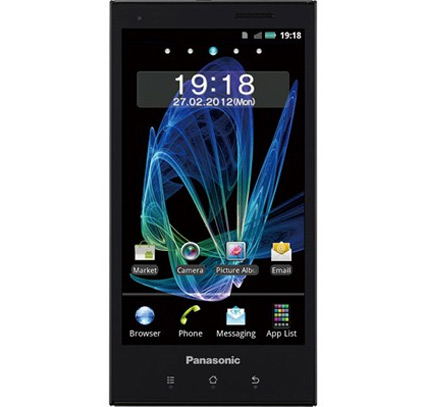
Photo: Panasonic

Panasonic Eluga Power
50% charging capacity within 30 minutes


Photo: Nokia

Nokia 808 PureView
41 megapixel camera


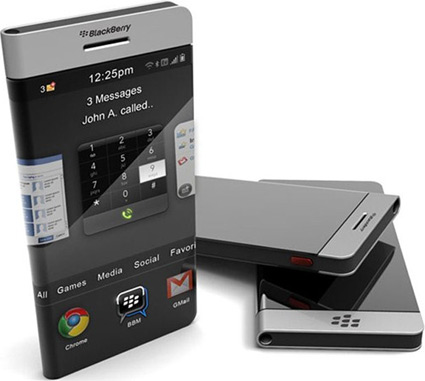
Image: John Anastasiadis / Yanko Design

Wraparound Blackberry
Concept BlackBerry with a smart wraparound display


Photo: Huawei

Huawei Ascend D Quad
Dolby 5.1 surround sound


For full details on these, and previews of a few more phones, check out the original MSN article here.