Update: Domestic violence – An SMS SOS

This update is the twelfth in our series of FrontlineSMS guest posts. Here, Anthony Papillion – Founder of OpenEMR HQ – shares the latest news on its use in his Oklahoma home town, where the software is helping provide relief to women suffering domestic violence

Anthony Papillion“In late May of this year, I assisted a local crisis center in deploying a solution we’ve now dubbed “FamilyFIRST“. FamilyFIRST is an SMS based system that allows victims of domestic violence to reach out to police, crisis counselors, and to document abuse incidents all via simple SMS messaging.

When the project first began, neither I nor the agency involved were sure how it would be received or if it would even be used. Educating victims to think pro-actively in crisis situation is a difficult thing. Their first reaction is to simply hide or get out of the situation if possible. This often means running without a purse or mobile phone.

So the agency decided to tackle the deployment in two phases: Technical and marketing. Technical, thanks to FrontlineSMS, was incredibly easy. By integrating the software along with a bit of custom software written by me, I was able to get a working system up and running bug free in less than a week. It includes message routing and archival, and is structured in such a way that the evidence stored inside of it has been deemed acceptable by the court.

Then, came the marketing side. Obviously, the agency didn’t have a lot of money so doing a huge PR blitz was out of the question. So they went about spreading word about the system in local PSA’s, victims groups, in seminars, and through area counselors working with the abused population. Because this was all very grassroots, they were able to accomplish this with a near zero budget and we were all totally shocked by the response it received.

Domestic violence (http://www.helenjaques.co.uk)

In the last two and a half months, FamilyFiRST has processed over 4,000 messages from victims of violence, not only in our local area, but around the state of Oklahoma. Evidence stored in the system has been used to help successfully prosecute 9 offenders and has resulted in combined sentences of over 110 years being handed down in those cases.

All in all, the system is a success and it couldn’t have happened without FrontlineSMS. Even though I’m a software engineer by trade, I wouldn’t have had the time or knowledge to build such a robust system from scratch and FrontlineSMS reduced ‘building the system’ to writing a few pieces of tie-in software and setting up a database.

Our future goal for the system is to work with other agencies in deploying in in health care (our core competency), domestic violence, and education. Thanks to this experience with FrontlineSMS, I’m confident that a robust system can be built quickly, easily, and very affordably (under $700 USD).

Thank you Ken and all the developers of FrontlineSMS. You’re helping to change the world, one download at a time”.

Anthony Papillion
Founder
OpenEMR HQ
www.openemrhq.com

(This post is also available on the FrontlineSMS community pages. Anthony’s original FrontlineSMS guest post, which describes the thinking behind the project, is available here. Congratulations to everyone at “FamilyFIRST” for such a great, inspiring and hugely valuable initiative)
On a mission to aid farmers in Latin America

This is the eleventh in our series of FrontlineSMS guest posts. Here, Jorge Alonso – a veterinarian turned ICT4D practitioner – discusses his thoughts on the application of the software in agriculture in Latin America

Jorge Alonso“I am a veterinarian by qualification but, as often happens in life, ended up working with information and communication technologies… applied to agriculture. And I have no regrets. For some time I have been interested in the application of technology in agriculture, and these days I am particularly excited by the potential of mobile technologies in helping small producers improve the marketing of their products.
Over the past ten years I have managed a regional potato network (in Spanish). As its content manager my duties included searching for useful information to distribute among subscribers, and it was here that I first came across FrontlineSMS. My first, initial thought was how it could be used to spread potato prices among my group.

Since last year I have been thinking more about how FrontlineSMS could help small-holder farmers in San Juan, my province here in Argentina. I participated in two e-forums organized by FAO on Mobile Telephony in Rural Areas (which were held in both Spanish and English) and I paid particular interest to the experiences of participants using text messaging in Africa, Asia and Latin America. It was a hugely beneficial exercise, and I think I found what I was looking for.

Diagram: Jorge Alonso

Based on the findings of my research I designed a process through which small producers could exchange information by SMS with organisations, with the end result being improvement in the marketing of their produce. What do organisations need to do this? A computer, a cell phone (or modem) and a copy of FrontlineSMS. Most organizations have a computer and cell phone. According to recent statistics, in Argentina there are 102.2 mobiles phones per 100 habitants. What’s more, 91% of mobile users in the lower income bracket have used SMS services. Using readily available and familiar technologies, my idea could be adopted by many institutions including associations, co-operatives, NGOs, independent and community radio stations, as well as rural and indigenous organisations.

I recently wrote a comprehensive article in Spanish which talks about mobile telephony, the global food crisis, what makes mobile phone technology so special, experiences in Africa, Asia and America, and finally my proposal in more detail. Please check it out. Comments and suggestions are welcome. Thank you”.

Jorge Luis Alonso G.
Content Manager
Red Electrónica de la Papa (Redepapa)
www.redepapa.org

Mobile meets plough in Cambodia

In this, the tenth in our series of FrontlineSMS guest posts, Dr. Robert Fitzgerald – Associate Dean of Research at the University of Canberra in Australia – explains their use of the software to provide agricultural data to farmers in Cambodia, and their plans to expand the service over the coming months

Background

“For the last three years I have been working with my colleague, John Spriggs, on agricultural development projects in Cambodia. John is an agricultural economist who has over the last few years been applying participatory action research methods to improving agricultural marketing systems in developing countries (Cambodia and Papua New Guinea). My background is in technology and education with an interest in the application of robust technologies to help users communicate and work together.

Originally, John invited me to join him on his project to explore ways we could use communications technologies to the improve the marketing system for maize and soy bean farmers in western Cambodia. From our early workshops in Battambang, Cambodia, we identified poor communications as one of the key constraints to improving the marketing system. At that time I had been developing an interest in mobile communications, particularly the application of SMS, and was following closely the work of the Pinoy Internet Farmers project.

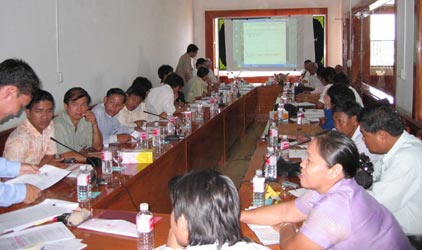
Early workshop in 2006 with traders and farmers, Battambang, Cambodia (photo: Rob Fitzgerald)

Following an initial workshop we presented a proposal to the Australian Centre for International Agricultural Research (ACIAR) for a year’s extension to John’s project to develop the Electronic Marketing Communication System (EMCS). During that project we used a propriety system, Infotxt (developed in the Philippines) to run an SMS server from the Price Division of the Ministry of Commerce (MOC) in Phnom Penh. A price officer collected price data each week and used this to update the server.

The trial was very successful and the information on demand system allowed a user to text specific keywords and that would return price information. We conducted a number of training sessions in 2007 and later that year the Cambodian People’s Party endorsed the EMCS as a significant agricultural innovation in Cambodia.

During 2007 we worked closely with Pieter Ypma from CAMIS and for a number of months they used our EMCS system to SMS-enable their web-based price database. In early 2008 our project concluded and we handed the server across to the MOC.

A new project begins

In April 2008 we started a new project which focused on production and marketing problems faced by poor smallholder farmers in northwestern Cambodia. While still a comparatively fertile area, over the last ten years crop yields have been declining and soils are being degraded by excessive cultivation and burning. Much of the crop development has been largely driven by market demand in Thailand, however local farmers are disadvantaged by lack of market information, and inadequate post-harvest technology and transport infrastructure.

The overarching aim of the project is to improve the functioning of the production–marketing system for maize and soybean in north-western Cambodia as a key to increasing cash income, sustainable growth and poverty reduction for smallholder farmers. We have established eight village clusters, four in the district of Samlaut (a protected area containing the last remnants of tropical rainforest in Cambodia) and four in the municipality of Pailin (a previously heavily forested area known for its gem mining).

Local farmers at recent field day in Pailin (Photo: Rob Fitzgerald)

Farmer workshops have been investigating key socio-economic issues related to adoption of the improved crop technologies and improving land use. Village level workshops have worked on gross margin and partial budgets to examine return on investments for various production technologies and discussed access to marketing information.

FrontlineSMS

Building on the previous project we wanted to extend our SMS work to both the production and marketing system. After a number of months of evaluation we selected FrontlineSMS as the platform for our SMS work (previously covered on kiwanja’s blog here).

In February 2009 we set up two FrontlineSMS servers. The first was with the newly formed Northwest Agricultural Marketing Association (NAMA) in Pailin which had particular focus on the provision of information (rated top priority by members) and the exchange and sharing of silo association price and market information. A second server was installed with the Maddox Jolie Pitt Foundation (MJP) in Battambang with particular emphasis on basic market information and health alerts. Check out the Pitt-Jolie press release here.

In June 2009 we further refined the systems and NAMA is focusing on using FrontlineSMS to broadcast messages to members, to provide maize, soy bean and cassava price information, and to distribute seed and fertiliser (input) costs.

NAMA FrontlineSMS server: Robert Fitzgerald with Moul Sam who runs the server (Photo: Rob Fitzgerald)

MJP has developed three main knowledge areas/teams for its FrontlineSMS server:

  • Health – Health alerts and health-related information, and health communications (e.g. clinic reminders for pregnant women)
  • Farmer – Price information, buyer contacts, weather information and farmer communications (e.g. meeting reminders)
  • MJP Head Office Field Communication System – A field communication system to provide field worker contact and updates, emergency/disaster protocols via SMS, meeting reminders, etc.

Future SMS applications

While our SMS servers are still in the early days of use we are exploring other SMS-based information systems such as GeoChat from InSTEDD and mhits– an innovative SMS-based micro-payment system developed in Australia by Harold Dimpel.

Volunteer and Intern opportunities

In recent conversations with both MJP and InSTEDD we have been exploring the possibility of establishing intern programs to encourage volunteers work with us. Some good work is already underway by volunteers. Oum Vatharith from Phnom Penh is already working on a Khmer translation of FrontlineSMS and I have talked to him recently about the development of FrontlineSMS user manual in Khmer.

We will be looking for volunteers in the form of software developers and IT savvy community/education development folk who are interested in working with these leading NGOs to help ensure that we realise the potential of technology to make a difference to peoples lives. If you are interested in helping out, please leave a comment!

Thank you.”

Rob Fitzgerald
Associate Dean of Research, Faculty of Education
University of Canberra
www.mathetic.info

Where compliance is king

This is the ninth in our series of FrontlineSMS guest posts. In this latest post Aurelio Gomes, who works out of Universidade Catolica de Mocambique, explains their use of the software in monitoring and improving anti-retroviral treatment (ART) compliance among rural communities in Mozambique

Thanks to the US President’s Emergency Program for AIDS Relief (PEPFAR), increasing numbers of HIV-infected people living in poor countries have been given access to anti-retroviral therapy (ART). Successful treatment of HIV depends upon ART recipients maintaining a compliance rate of 95% or higher to prevent the emergence of drug resistance. The commonly used first-line regimen has a low genetic barrier to resistance when dosing is below recommended levels. Not only does widespread resistance lead to a need for costly second-line regimens, but it also threatens to reverse ART survival gains. Worst still, resistant HIV may also be transmitted to others, severely limiting treatment options.

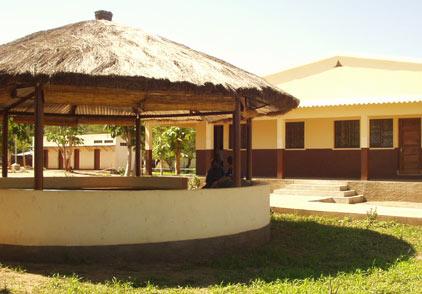
Clinic, Mozambique (courtesy Aurelio Gomes)

As ART therapy becomes more widely prescribed in Sub-Saharan Africa, suitable systems to ensure patient compliance have to be designed and implemented to maximize ART effectiveness. This is especially necessary in rural areas of Africa. Mozambique exemplifies this situation since 80% of the total Mozambican population are rural. Patients are difficult to locate because formal postal addresses don’t exist in these areas. As in many parts of sub-Saharan Africa, residents are not connected to the electricity grid, and lack regular phone service or access to clean water. Stigma and discrimination increase the challenge of ensuring compliance, as HIV- positive individuals are often very concerned about their privacy.

Following initial technical assistance from our partners at Inveneo, we have been successfully using FrontlineSMS for several months to facilitate communication between the HIV treatment centers and the community health care workers (CHWs) deployed in remote rural areas. These CHWs are armed with mobile phones, enabling communication to flow more quickly and accurately, leading to an improvement in health care delivery.

Our FrontlineSMS-driven communication system is helping us maintain a 95% and higher compliance of ARV therapy, crucial for the patient, the success of our programme and efforts to reduce the chances of development of drug-resistant strains of the virus.

Aurelio Gomes
Project Coordinator
Universidade Catolica de Mocambique
www.ucm.ac.mz