Mobile Design. Sans Frontieres.

Although I find myself intrigued by the convergence of computer science, human computer interaction (HCI) design and international development, it’s not often that I find myself in a room of experts. They’re just not places I tend to mix, most likely because I have no professional IT qualifications, let alone a computer science degree, and I’ve done most of my own software design off-the-cuff, much to the dismay of people who hoped there was a robust process behind it.

Last August I got my first taste of the very real challenges that the computer science world faces when it comes up against the equally real challenges of international development. The meeting – convened at UC Berkeley – was an eye-opener for me to say the least, and as I left I blogged about how thankful I was that it wasn’t me who had to come up with the answers. You can read that post here.

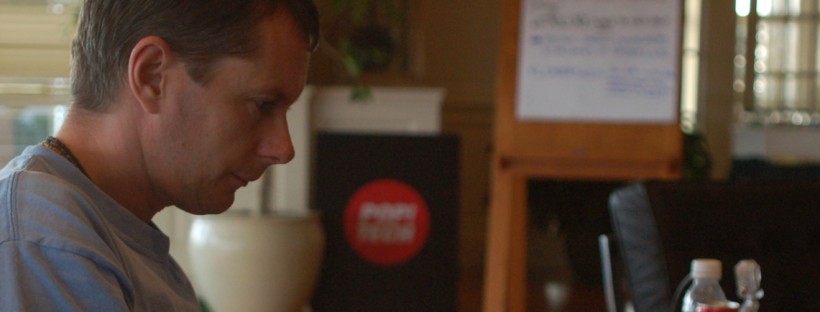
A little later in the year I was invited to speak at the First International Workshop on Expressive Interactions for Sustainability and Empowerment, held at one of Vodafone’s London offices. The topic of conversation was similar, but here the focus was on how to build mobile tools that work in difficult, challenging, ‘foreign’ environments. Following my talk I was invited by the Editor of Interfaces, John Knight, to contribute an article to the next edition of their magazine.

For the article I teamed up with Joel Selanikio, co-founder of DataDyne.org and the creator of the EpiSurveyor mobile data collection tool. It made sense working with Joel for a number of reasons. Not only have I known and admired him and his work for some time, but Joel is first and foremost a paediatrician. For him – like me – understanding the problem takes priority over the technology, consideration of which should always come last. FrontlineSMS and EpiSurveyor have both evolved from time spent in the field – observing, experiencing and understanding before designing, developing and building.

You can read our thoughts on the process – “Ten things you might want to know before building for mobile – in the current edition of Interfaces magazine (PDF, 2.5Mb).

For further posts on the subject see the “Mobile applications development” section of this blog, which includes a 10 minute video on the topic.
Information into action: Africa and beyond

Two organisations I’ve had the pleasure of working with – Tactical Tech and Fahamu – have independently announced the release of a film and a book which cover different aspects of non-profit digital activism. Both are well worth a look.

Info-activism.org – a Tactical Tech initiative – explores how rights advocates “use information and digital technology to create positive change”. Actions are broken down into 10 tactics which, through the site, provide original and artful ways for rights advocates to capture attention and communicate a cause (see video, above). The website includes a 50-minute film documenting inspiring info-activism stories from around the world and a set of cards, with tools tips and advice to help people plan their own info-activism campaigns. Further details of the launch are available on the BBC News website.

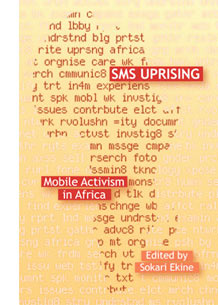
Turning to more traditional media, Fahamu/Pambazuka have published a new book – SMS Uprising: Mobile Phone Activism in Africa – which provides “a unique insight into how activists and social change advocates are addressing Africa’s many challenges from within, and how they are using mobile telephone technologies to facilitate these changes”.

The book is essentially a collection of essays by people engaged in using mobile phone technologies for social change, and it provides an analysis of the socio-economic, political and media contexts faced by activists in Africa today. The essays address a broad range of issues including inequalities in access to technology based on gender, rural and urban usage, as well as offering practical examples of how activists are using mobile technology to organise and document their experiences. Contributors include friends Sokari Ekine (Blacklooks) – also the editor – Amanda Atwood (Kubatana.net), Juliana Rotich (Ushahidi), Christian Kreutz (Crisscrossed.net) and others.

Congratulations to everyone at Tactical Tech and Fahamu on their initiatives, both of which provide valuable contributions to a growing body of literature on digital activism. Thanks also for the invitations to contribute – an honour and a pleasure!

ICT, emergencies and conflicts

Following their recent examination of the mHealth landscape, the UN/Vodafone Foundation partnership today turned their attention to a new topic – New Technologies in Emergencies and Conflicts. The new study, available for download on the UN Foundation website, examines how authorities and humanitarian/aid organisations balance the opportunities and challenges of exploiting different technologies at key stages during the timeline of a crisis.
The report provides a useful overview of the topic, and gives a number of good examples of how social media tools are being deployed on the ground in emergency and crisis situations. The report also highlights a number of mobile-related tools and services – including FrontlineSMS and Souktel – and provides a number of examples of how Ushahidi has been deployed in trouble spots around the world.

Update: Release of the report was also covered on the BBC News website – check out “Aid agencies must use new tools” for more.

Social mobile gets its own “roadmap”

After three workshops on three continents, conversations and meetings with countless NGOs, academics, researchers and technologists, and many hours of conference calls, W3C this week released their “Mobile Web for Social Development Roadmap”, a comprehensive document which sits at the heart of the wider work of the Mobile Web for Development Interest Group (MW4D).
According to the Roadmap document, its purpose is to help:
“… understand the current challenges of deploying development-oriented services on mobile phones, evaluate existing technologies, and identify the most promising directions to lower the barriers of developing, deploying and accessing services on mobile phones and thereby creating an enabling environment for more social-oriented services to appear”
The Roadmap is split into two distinct sections. The first covers challenges and issues in developing mobile tools for social development, and the second looks specifically at technology options. The primary audience are individuals, organisations and entrepreneurs interested in social mobile; the mobile industry itself; academics; international organisations and, finally, policy makers and regulatory bodies.
The Roadmap is very much a work-in-progress, and the MW4D Interest Group welcomes comments, recommendations and suggestions to help shape it as the work moves forward.

After three workshops on three continents, conversations and meetings with countless NGOs, academics, researchers and technologists, and many hours of conference calls, W3C this week released their “Mobile Web for Social Development Roadmap”, a comprehensive document which sits at the heart of the wider work of the Mobile Web for Development Interest Group (MW4D).

According to the Roadmap document, its purpose is to help:

“… understand the current challenges of deploying development-oriented services on mobile phones, evaluate existing technologies, and identify the most promising directions to lower the barriers of developing, deploying and accessing services on mobile phones and thereby creating an enabling environment for more social-oriented services to appear”

The Roadmap is split into two distinct sections. The first covers challenges and issues in developing mobile tools for social development, and the second looks specifically at technology options. The primary audience are individuals, organisations and entrepreneurs interested in social mobile; the mobile industry itself; academics; international organisations and, finally, policy makers and regulatory bodies.

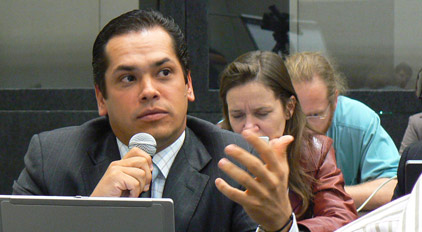
Question time in Sao Paulo (2008). Other meetings were held in Bangalore (India) in 2006, and Maputo (Mozambique) in 2009. Photo: Ken Banks, kiwanja.net

The Roadmap is very much a work-in-progress, and the MW4D Interest Group welcomes comments, recommendations and suggestions to help shape it as the work moves forward.